

















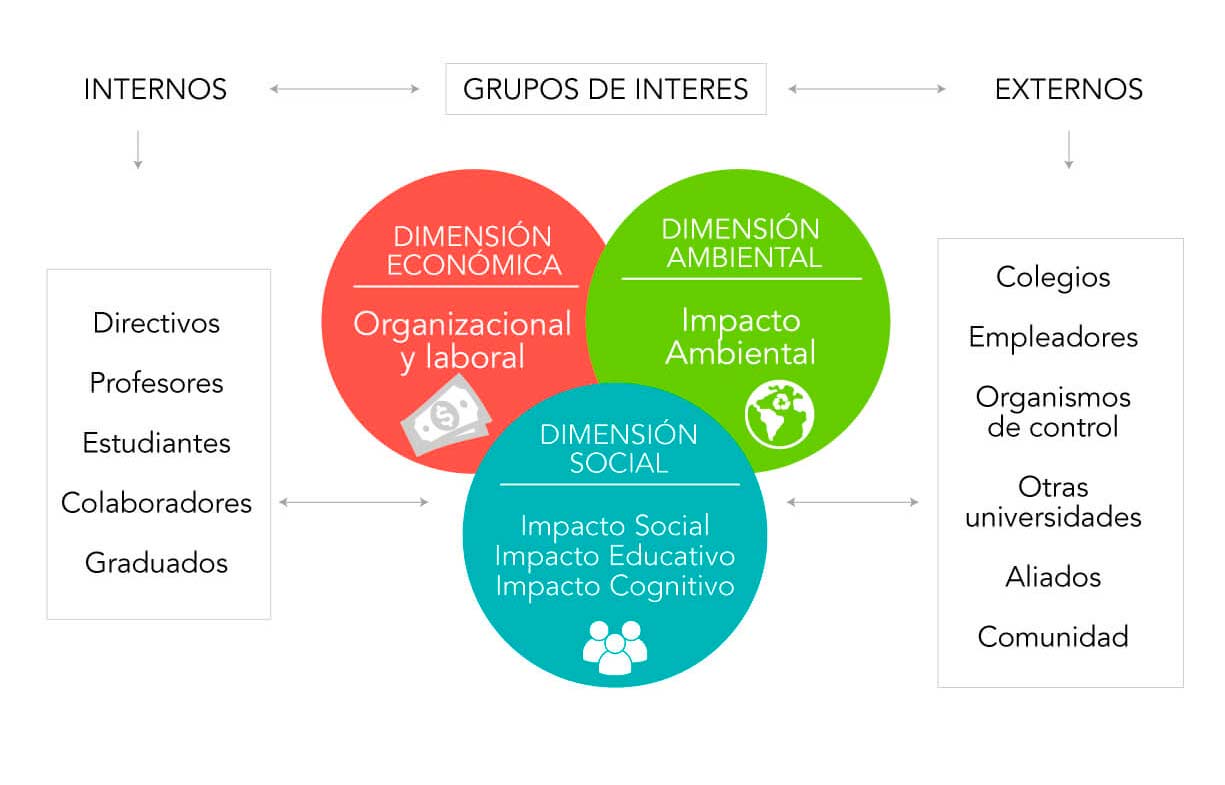
UEES management is based on a Sustainability Model structured on the basis of the identification of stakeholders (internal and external) and the impacts on each of the key dimensions of sustainable development.
Since May 2010, UEES has adopted commitments aligned with international principles related to human rights, labor standards, environment and anti-corruption. In this way, from its areas of scope, the university joins various organizations that contribute to improving the living conditions and well-being of people.
As a higher education institution, UEES applies international sustainability frameworks. Therefore, it implements the Principles for Responsible Management Education (PRME - Principles for Responsible Management Education), which provide a global network for academic institutions to promote sustainability and corporate social responsibility. This framework enables the integration of universal values into curricula, research projects and community outreach programs.
PRME, founded in 2007 as a platform to strengthen the commitment to sustainability in higher education, seeks to provide students with the necessary tools to lead positive change in the future. It also engages management and business schools in developing leaders capable of balancing economic goals with sustainability, promoting a holistic approach to decision making.
UEES management is based on a Sustainability Model structured on the basis of the identification of stakeholders (internal and external) and the impacts on each of the key dimensions of sustainable development.
Since May 2010, UEES has adopted commitments aligned with international principles related to human rights, labor standards, environment and anti-corruption. In this way, from its areas of scope, the university joins various organizations that contribute to improving the living conditions and well-being of people.
As a higher education institution, UEES applies international sustainability frameworks. Therefore, it implements the Principles for Responsible Management Education (PRME - Principles for Responsible Management Education), which provide a global network for academic institutions to promote sustainability and corporate social responsibility. This framework enables the integration of universal values into curricula, research projects and community outreach programs.
PRME, founded in 2007 as a platform to strengthen the commitment to sustainability in higher education, seeks to provide students with the necessary tools to lead positive change in the future. It also engages management and business schools in developing leaders capable of balancing economic goals with sustainability, promoting a holistic approach to decision making.
The management of UEES is based on a SUSTAINABILITY MODEL structured on the basis of the identification of stakeholders (internal and external) and the impacts on each of the dimensions of the United Nations Sustainable Development Goals:
UEES adheres to the Global Compact, In this way, UEES joins the many organizations that contribute to improving the living conditions and prospects of the people in its areas of scope, by committing to the 10 principles related to Human Rights, Labor Standards, Environment and Anti-Corruption.
As an institution of higher education, UEES applies international sustainability frameworks, which is why it applies the six Principles for Responsible Management Education (PRME), which provide a global network for academic institutions to promote sustainability and corporate social responsibility, and a framework of commitment for the incorporation of universal values in curricula, research projects and outreach.
PRME is a United Nations-backed initiative, founded in 2007 as a platform to raise the profile of sustainability in schools around the world, providing today's business students with the ability to create change tomorrow. It also engages business and management schools to provide future leaders with the skills needed to balance economic and sustainability goals, while drawing attention to the Sustainable Development Goals.