
The world reference on constitutional law, Richard Albert, visited the Universidad Espiritu Santo to present his book Constitutional Reforms: Making, Breaking and Changing Constitutions. The expert in jurisprudence is a professor in Law at William Stamps Farish, Director of Constitutional Studies at the University of Texas and professor of the Master's program in Constitutional Law at UEES.
At the event, the specialist addressed the topics covered in his work, together with a panel in which Alí Lozada, president of the Constitutional Court; Teresa Nuques, judge of the Constitutional Court; and other experts participated. Among the attendees were Mario Cuvi, Vice Minister of Governance, as well as judges and constitutional lawyers.
“The book exposes a constitutional architecture in which we analyze the regions of the world to see the ways in which constitutions can be reformed, it does not give us a way out of which is the best, but it shows us what exists to make a decision and give attention to these mechanisms,” said Pablo Alarcón, Director of the Graduate School of Law UEES.
During his speech, Richard Albert highlighted the constitutional reality of Ecuador, pointing out that since 1830 the country has had 20 constitutions, which implies that an average life of 9.6 years each. In view of this dynamic, the renowned expert highlighted the importance of being prepared for constitutional changes and posed three fundamental questions that must be addressed at that time: What model of Constitution will they choose? What role will the courts play? And what will the process be like in which they will write it?
“There are 3 certainties in life: The sun will always rise in the east; the government will always charge you a tax and in Ecuador there will be a new Constitution,” said the specialist.
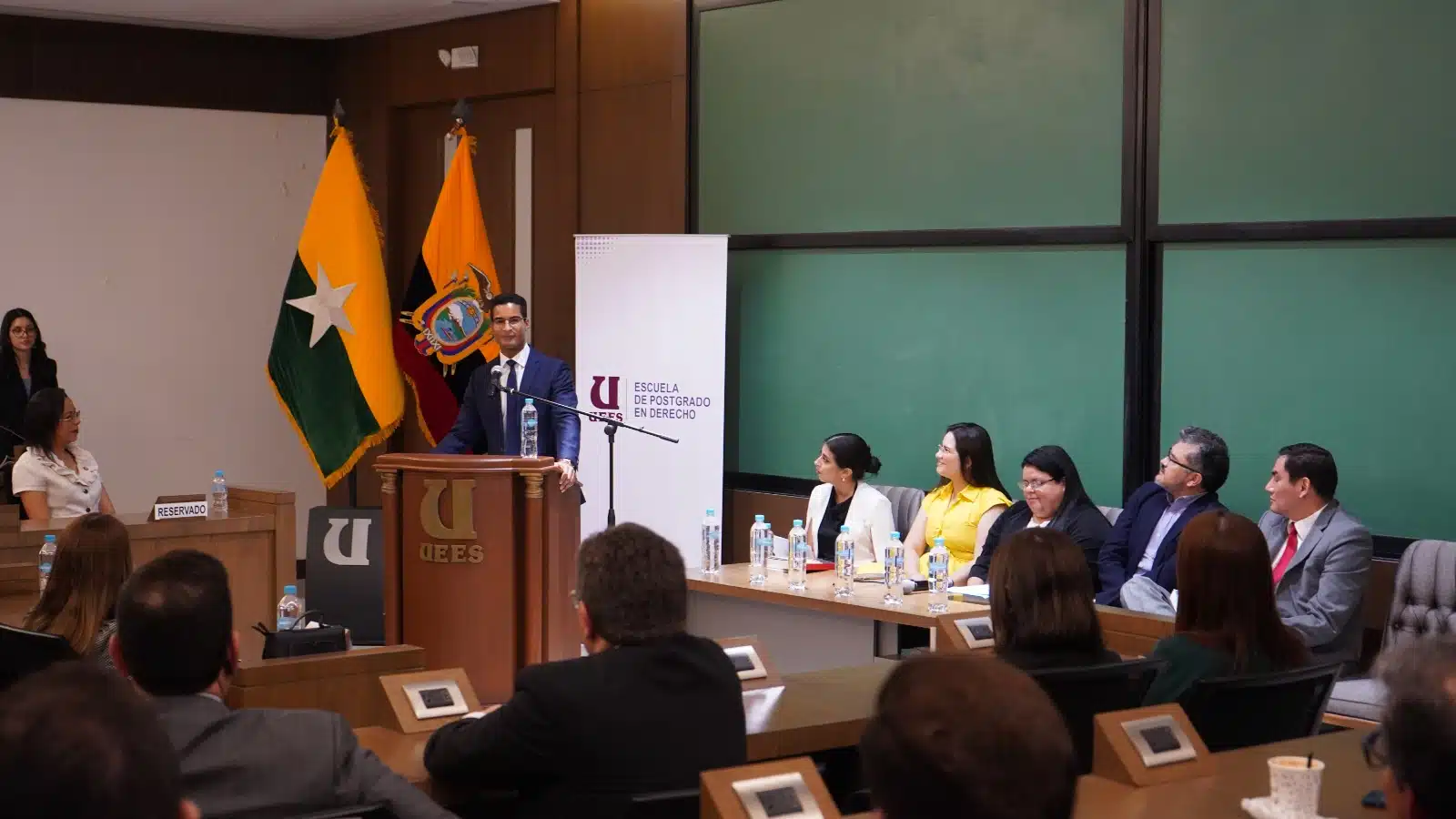
The meeting was attended by Mario Cuvi, Vice Minister of Governance, as well as judges and constitutional lawyers, who contributed with their experience and knowledge to the enrichment of the dialogue.
Richard Albert's visit to Espiritu Santo University was an invaluable opportunity for the academic and legal community in Ecuador, allowing for a deeper analysis and understanding of constitutional reforms at a global level.
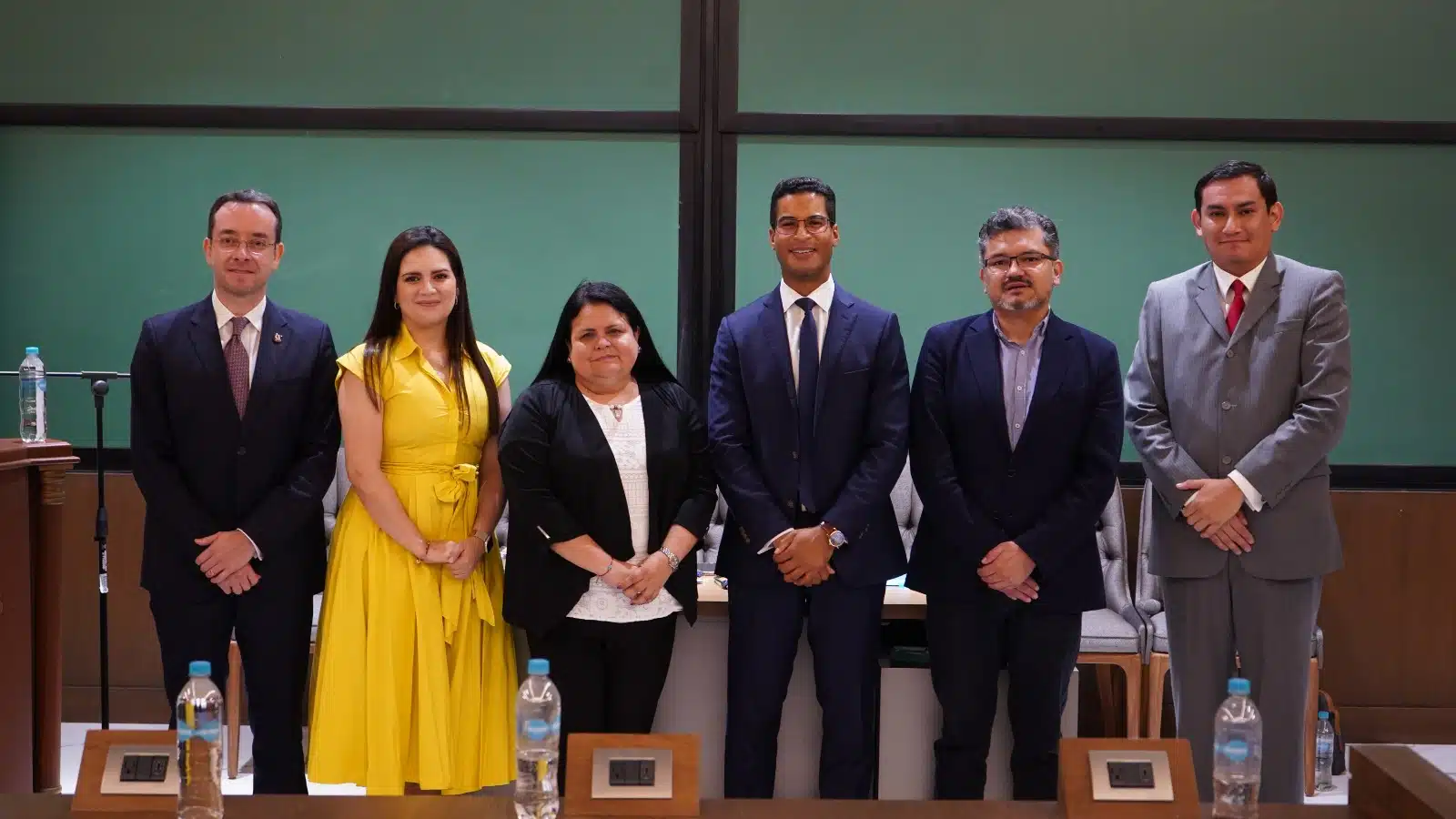
In the photo: Dr. Pablo Alarcón, Director of the UEES Graduate School of Law; Dr. Pamela Aguirre, Director of the UEES Legal-Social Observatory; Dr. Teresa Nuques, Judge of the Constitutional Court of Ecuador; Dr. Richard Albert, William Stamps Farish Professor in Law, Professor at University of Texas at Austin; Dr. Alí Lozada Prado, President of the Constitutional Court of Ecuador and Dr. Santiago Ortega, Academic Coordinator of the UEES Graduate School of Law.