


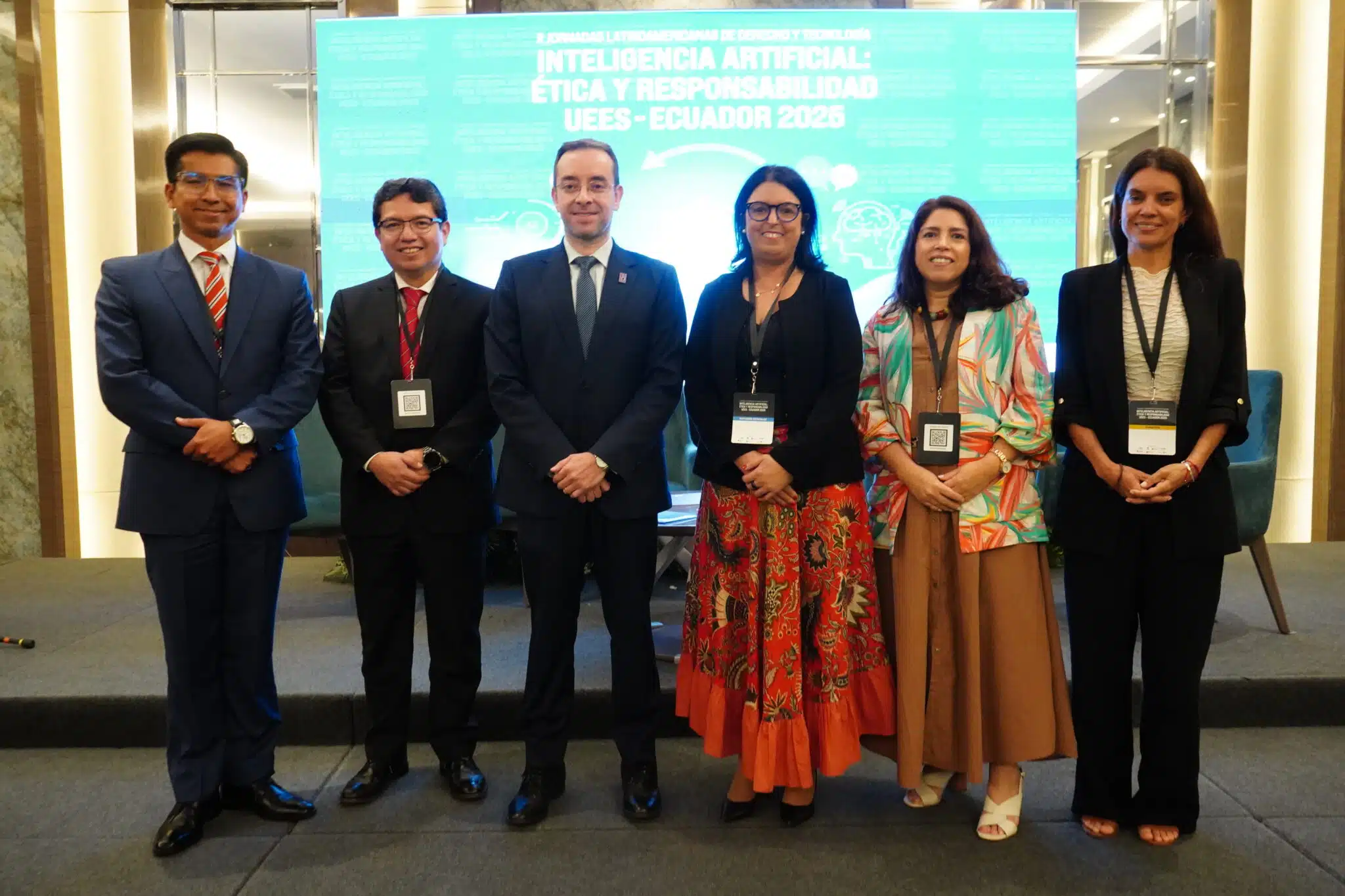
The Universidad Espiritu Santo (UEES), as a member of the Consortium of Latin American Universities, held the international academic meeting: the II Latin American Conference on Law and Technology, focused on “Artificial Intelligence: Ethics and Responsibility.”. The event brought together academics and professional experts in law, public management, technology, health and education from various countries around the world to analyze the profound legal and ethical challenges posed by the accelerated advance of artificial intelligence in our society.

Nearly 400 attendees participated in 2 days of simultaneous conferences and panels that addressed issues of labor law, education, intellectual property, administration of justice, health, civil liability, public management and their link with these emerging technologies.
The experts came from nearly 30 universities from around the world. Mexico, Chile, Argentina, Spain, Italy, Uruguay, Brazil, Colombia, Panama, Peru and Ecuador.. Keynote speakers included: Fabrizio Peralta, superintendent of Data Protection of Ecuador; Rafael Rubio, from Universidad Complutense de Madrid; Sergio Verdugo, from IE University (Spain); Velda Gámez, from Tecnológico de Monterrey; Leysser León, from Pontificia Universidad Católica del Perú; Silvana Fortich, Universidad Externado de Colombia; Lilian San Martín, Universidad del Desarrollo, Chile; Laura Nahabetián, Universidad de la República, Uruguay; Cecilia Alcalde, Universidad del Desarrollo; and Víctor Núñez, Universidad Católica San Pablo.
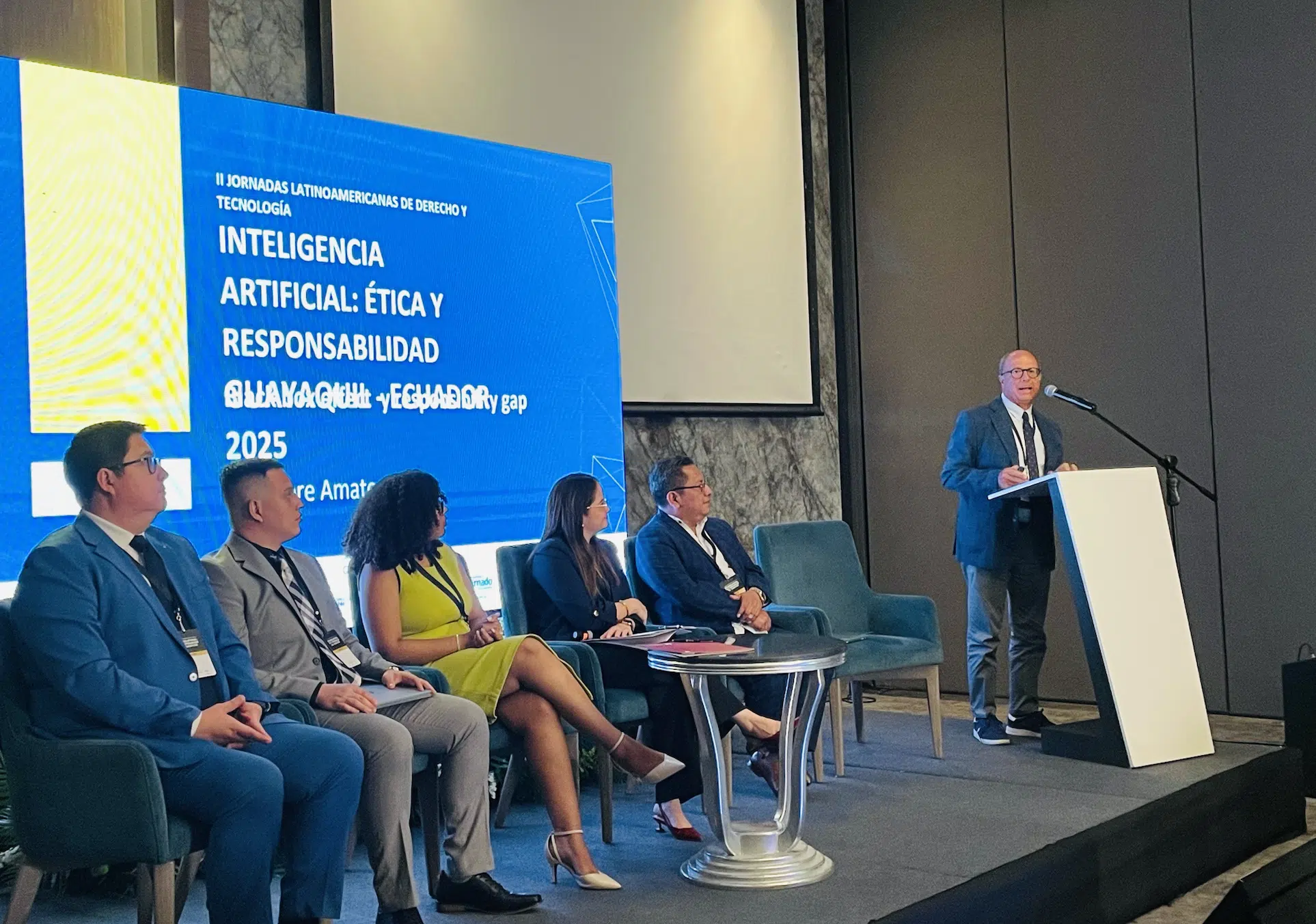
Raúl Campusano, Postgraduate Director of the Universidad del Desarrollo of Chile said: “Ecuador is a Latin American country in an extremely interesting development process. As in Chile and other countries in the region, we have a ticket to economic growth, prosperity and well-being”.
“I would call on the citizens of Ecuador to embrace, with open arms, these new technologies and, at the same time, to work with their legislators so that there is adequate and necessary regulation for these new technologies,” he added.
The conference was organized by a Latin American academic consortium comprised of the Universidad Espíritu Santo of Ecuador, Universidad del Desarrollo of Chile, Universidad Externado of Colombia, Tecnológico de Monterrey (Mexico), Pontificia Universidad Católica of Peru, Universidad de la República (Uruguay) and Universidad Católica San Pablo of Peru.
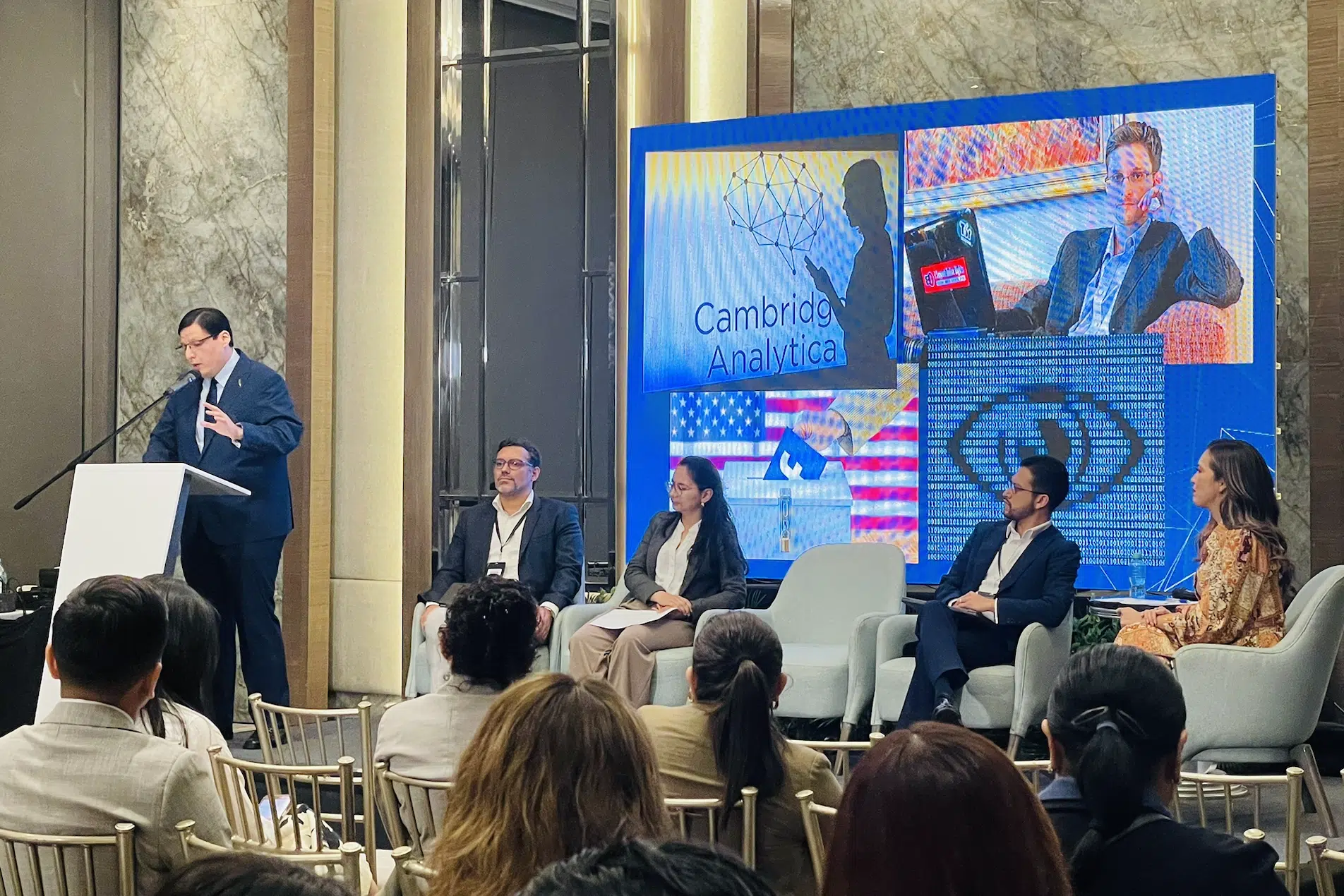
“The National Assembly is debating the Artificial Intelligence Law and we want this space to have that contribution. We will generate proposals for the National Assembly, the public sector and education in general. The 100 papers of our panelists will be available to the public at no cost as a real, objective, responsible and sustained contribution of the academy,” explained Pablo Alarcón, Director of the Graduate School of Law of UEES.
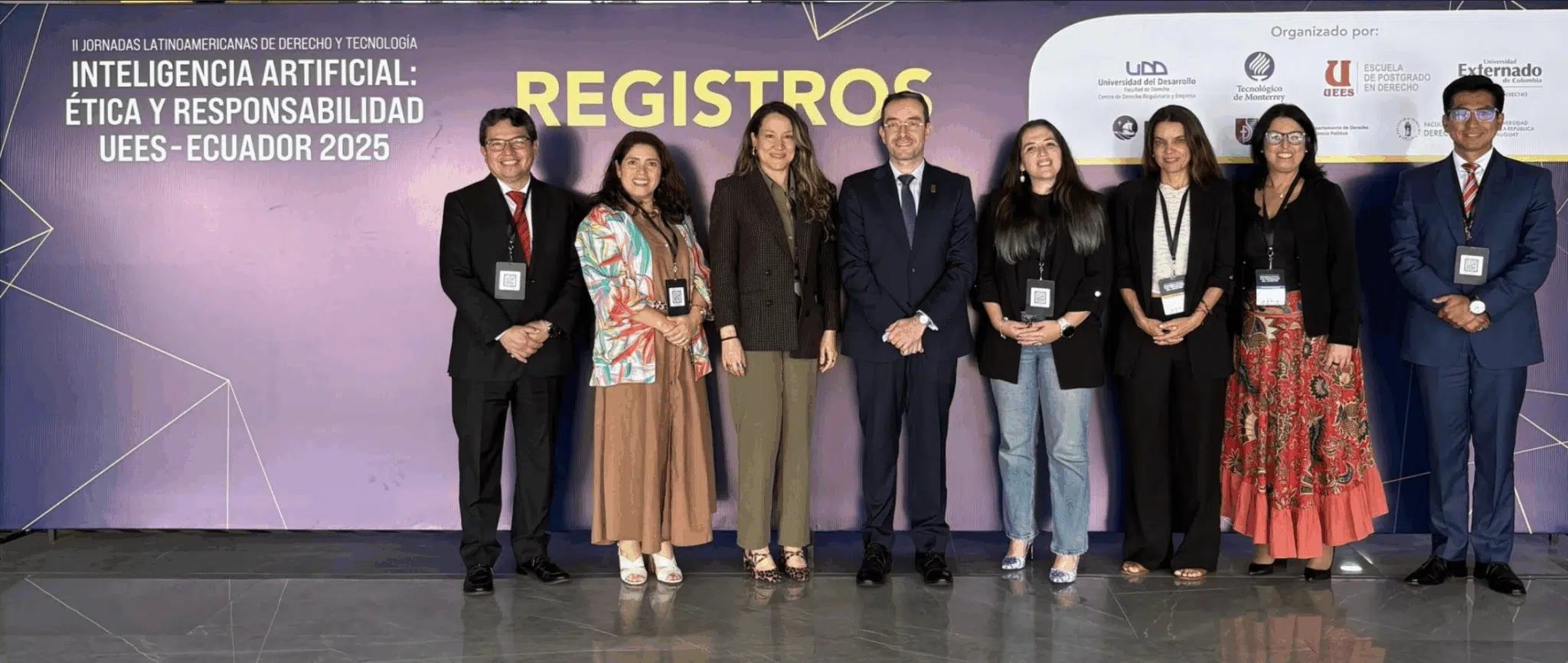
With this initiative, UEES ratifies its commitment with the generation of knowledge and with education in Culture of Legality, in this case applied to the responsible use of artificial intelligence.