
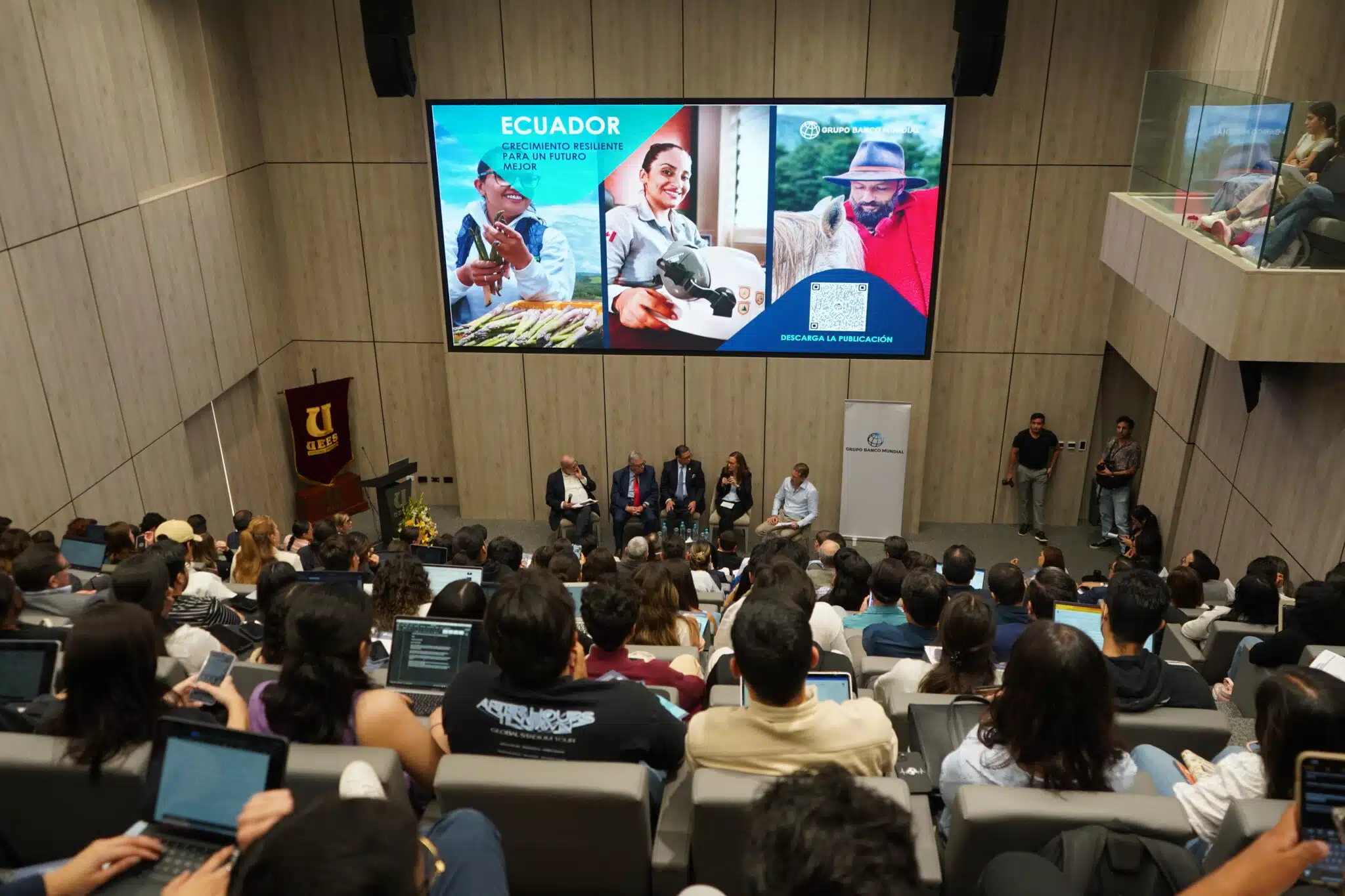
The World Bank and the Universidad Espiritu Santo (UEES) presented the report “Ecuador: resilient growth for a better future”.”, a comprehensive analysis that identifies the main problems the country faces in achieving sustainable growth and positioning itself as a high-income economy.
The document, developed by the World Bank Group, highlights that, in addition to the urgent need to control the increase in insecurity and crime, Ecuador must unleash the potential of the private sector to achieve sustainable economic development. According to the report, this process requires action in three key areas:
- Responsible and balanced management of economic resources.
- Promoting the growth and competitiveness of companies.
- Development of key sectors such as agriculture, formal mining and tourism, which, through reforms and agreements, have a high potential for expansion.
The report highlights that Ecuador possesses significant natural resources that can be harnessed to reduce poverty and turn the country into a high-income nation. Among the resources mentioned are arable land, forests, fisheries, hydroelectric power, as well as oil, gold and copper reserves. Sectors such as agriculture, extractive industries and tourism also present significant opportunities for the country's economic growth and sustainable development.
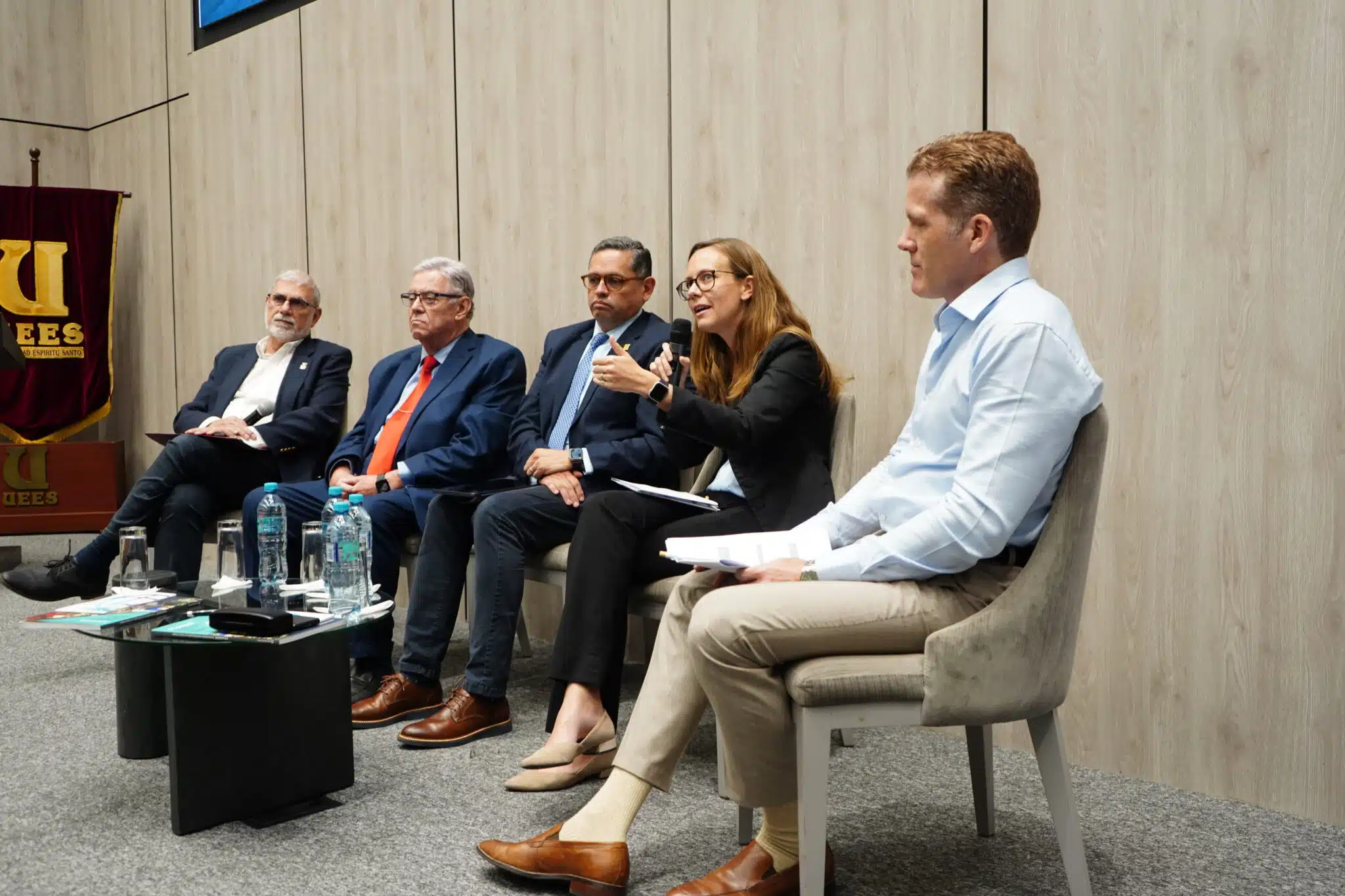
Following the presentation of the report, a panel discussion was held, with the participation of key figures from the economic and governmental spheres, such as Mateo Estrella, Minister of Tourism; Tanja Goodwin, World Bank economist; Alberto Acosta Burneo, economic analyst; Salomón Larrea, former Minister of Agriculture; and as moderator, Alberto Dahik, Director of the Center for Economic and Social Studies for Development (CESDE) of UEES.
Find the full report: https://www.bancomundial.org/es/country/ecuador/publication/ecuador-cem-informe-crecimiento-resiliente-para-un-mejor-futuro