
When we talk about media, what is the first thing that comes to mind, the answer is undoubtedly conditioned to the generation to which we belong and the environment in which we live; the truth is that the media are permanently related to the development of markets and fulfill several functions such as informing, entertaining, educating, and raising awareness. Currently, 92.2% of people in Guayaquil and Quito think of the media as a source of entertainment and 88% as a source of information (TGI 2021 R2 Study, Kantar IBOPE Media), which shows the relevance of the media.
The Covid-19 pandemic
The Covid-19 pandemic presented for all markets important changes in the consumption behavior of products and media. In Ecuador, the first case of Covid-19 was confirmed in February 2020 and as of March 17 of the same year, a strict quarantine began, to which other measures were added to curb the increase in infections; from that moment on, households were forced to reconfigure their purchasing habits and consumption of media, brands, products and services. After this and the changes in the evolution of the pandemic, the measures have become more flexible; currently with the progress of vaccination at national level and the maintenance of certain restrictions, the outlook is encouraging, in fact we can speak of a possible reactivation but with permanent changes in the routine both in the market and in consumers.
Changes in the media
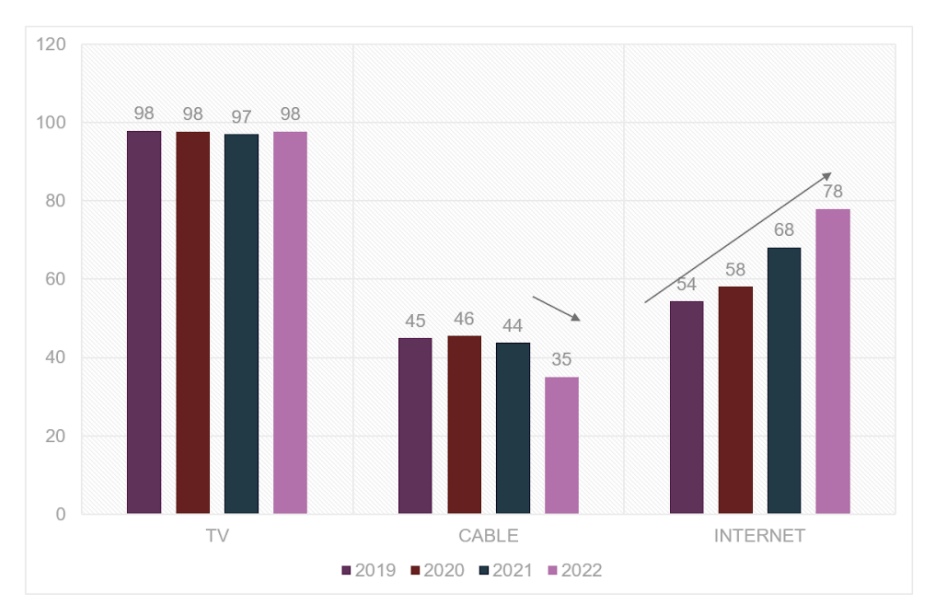
People staying at home longer during the day increased media penetration and consumption at all socioeconomic levels, causing important changes during and after 2020. The most representative media such as television maintain their leadership in penetration within households with 98%, followed by internet with an increase of 10 points versus 2020, that is, more households joined the service subscription or improved the previously acquired plans; however, cable television presents an important decrease in these last 3 years, this is due to the fact that, with the new work modalities and virtual classes households prioritized certain expenses.
 Source: Kantar IBOPE Media (2022) - Master Sample Study
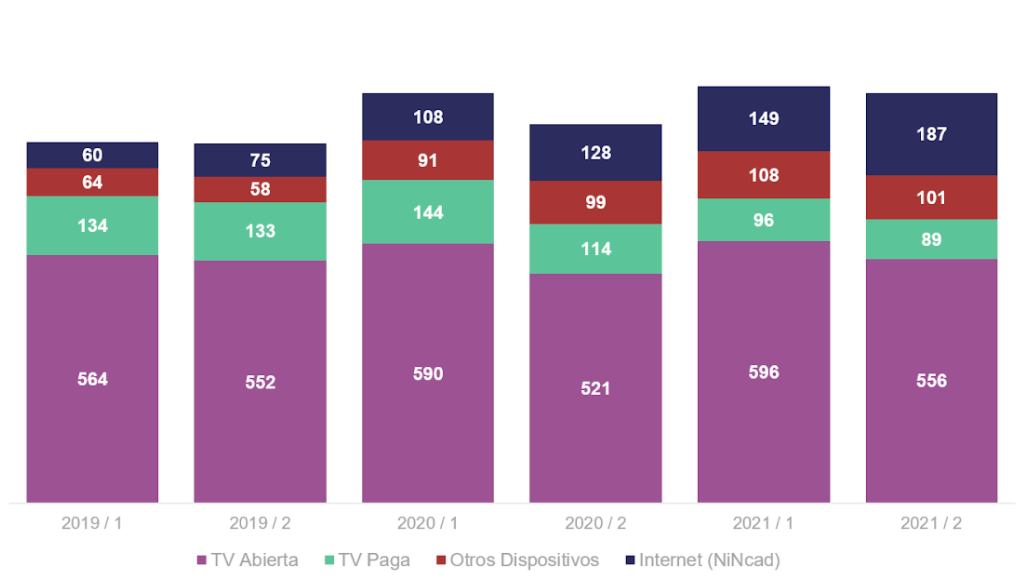
2021 is the year in which the consumption of internet content through television sets consolidates and has a higher growth compared to previous years, mainly affecting paid television. Free-to-air television maintains its performance levels, being the first half of the year where the audience is most concentrated.
 Source: Kantar IBOPE Media (2022) - INSTAR Software - VAM Study - Total People - Consolidated - LV - 06:00 a 24:00
With these significant increases in television and internet, the media face the challenge of being representative, creative and captivating with their content in order to maintain loyalty levels. Programmatic genres such as news and information gained ground, the credibility of television is maintained as well as the need for information, this for television means being more attractive to brands that are looking for new points of contact with their consumers or potential customers. On the other hand, advertisers should focus their efforts on complementing the traditional media strategy with new digital formats that will enhance the results and improve their performance in the long term, as long as the objective of the branding is clear. Design a comprehensive media mix that allows them to be relevant in the digital environment that has become the battlefield of large and small.
Gricelda Pambabay Herrera
Faculty of Communication