


As teachers, we must connect the science of learning - how the brain learns - with classroom practices for all students. Much of what experts have shared about neuroscience has been done in the last 5 to 10 years. Therefore, anyone who has not been trained in the last few years is not benefiting from very useful information to teach more effectively.
We cannot forget that learning is a neuro-physiological phenomenon that occurs through biochemical processes in the brain, and the growth and reorganization of neural connections. This implies that as teachers we must know how children learn and empower them with this information. A very simple formula to understand the learning equation would be: Attention + memory = Learning.
We need to receive as much information as possible about how to improve our students' attention and memory so that they can learn more and better. We already know that teaching is not the same as learning. The teacher teaches, but does the student learn?
We know there is a huge difference between remembering or memorizing and learning. If all we do is “put” information into students' heads and ask them to remember dates or information, that information never makes it into long-term memory. It stays in the hippocampal (buffer) memory until it is soon forgotten.
So what should we do to help that information get into long-term memory? For starters, if they are of writing age, have students write! Note taking is part of a process in which the student receives the information, decodes it, processes it, chooses the words since they can't write verbatim due to a time issue, and gets it out through writing. This whole process helps the information pass into long-term memory.
In addition, in order to learn, you have to “do” something with the information: repeat it, draw it, make mind maps, thinking maps, graphic organizers, timelines, etc. Without mental activity, there is no learning. Repetition is key to learning. But not repeating what the teacher says; what we are looking for is for the students to respect it in their own words.
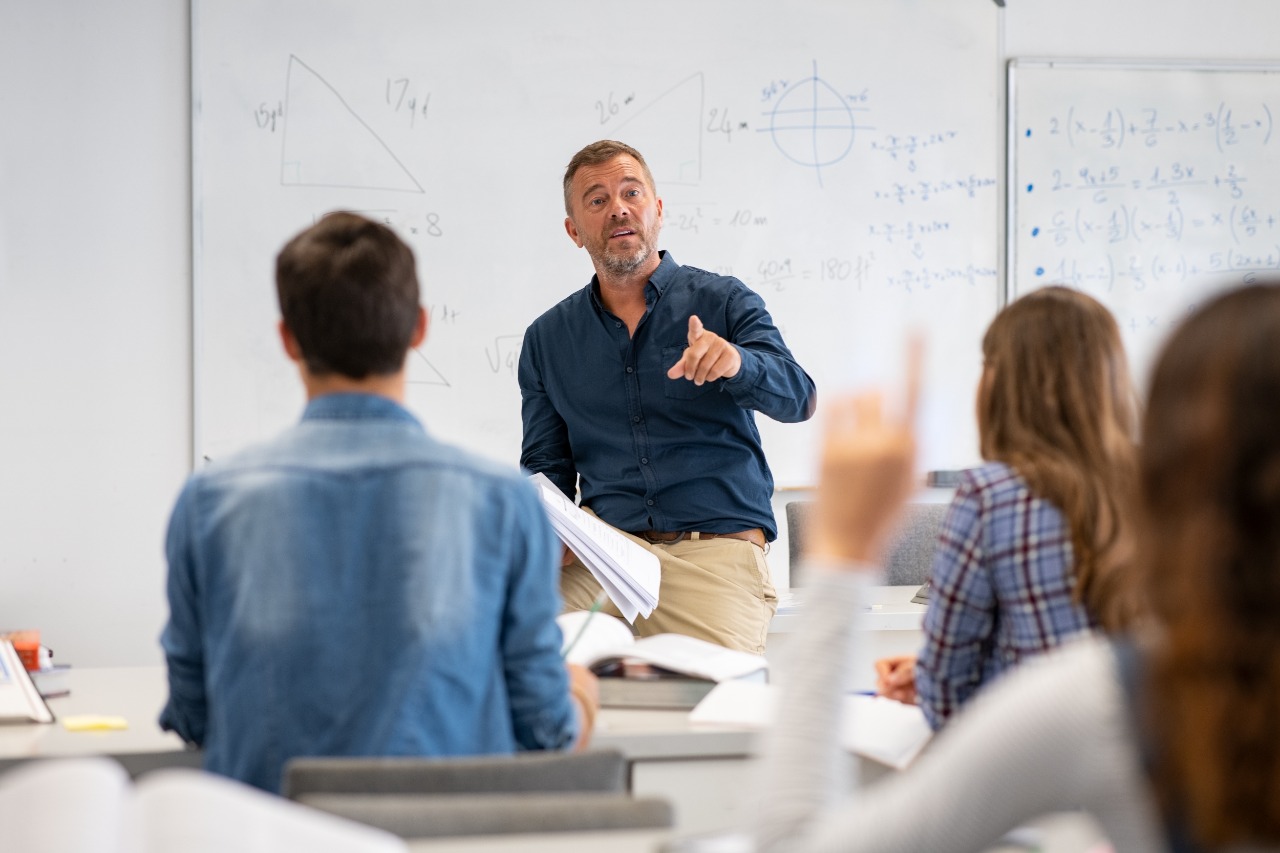
Clearly, the teacher is responsible for capturing the students' attention.
From day one, teachers and students form a partnership. And that partnership must be consolidated, because without a bond there is no learning. If, as professionals, we take responsibility for our decisions and actions, and commit ourselves to collaborate with the learning process of our students, we would be capable of fantastic things.
This implies working with their strengths as well as their weaknesses, implementing strategies that develop the children's attention and memory, working on the bonds to generate trusting and safe relationships, eliminating all possible threats.
The absence of threat in the educational environment is one of your biggest challenges. What are you doing to generate a climate free of threat, with cheerful, receptive students?
High levels of cortisol (one of the stress hormones) in the brain make children unable to learn or remember. Hence the importance of working on the absence of threat in the classroom.
Returning to the subject of capturing the students“ attention, we must plan classes where the very beginning is forceful. The most important things are taught at the beginning, and the second most important things at the end. Let's generate interesting stretches of classes, with mental breaks when attention wanes. If we start teaching a class and finish after 40 minutes, we should know that in the meantime we have ”lost" many of the students. Capturing the external, sustained and selective attention of students can be an almost impossible task for many teachers. No matter how interesting the content may be, we cannot pay uninterrupted attention. We already know that we have 10 seconds to capture students' attention and then 10 minutes to sustain it.
At minute 11, attention drops steadily. Obviously, at the initial level, this time is shorter, and with adults, a little longer.
Like a magician, you first have to get the attention of your students. Only then will they pay attention to you.
Attention is cyclical. Brain intrusion is what takes your attention away from the students. This means that even though it looks like they are listening, they may not be listening! Attention is cyclical-it goes back and forth, back and forth. We must do something emotionally relevant to get their attention again. An ally in capturing students' attention is novelty. What are you going to surprise them with today-an anecdote, a new classroom design, a visit?
Emotional connection is the other key. Do you want them to remember? Make what you explain meaningful and relevant, so they can relate it to their lives. Students should be able to answer the question “What good is this to me in my life?" at any point in the class.
Laura Lewin
(ABS International)




Novel title, captures the attention as well as the content.