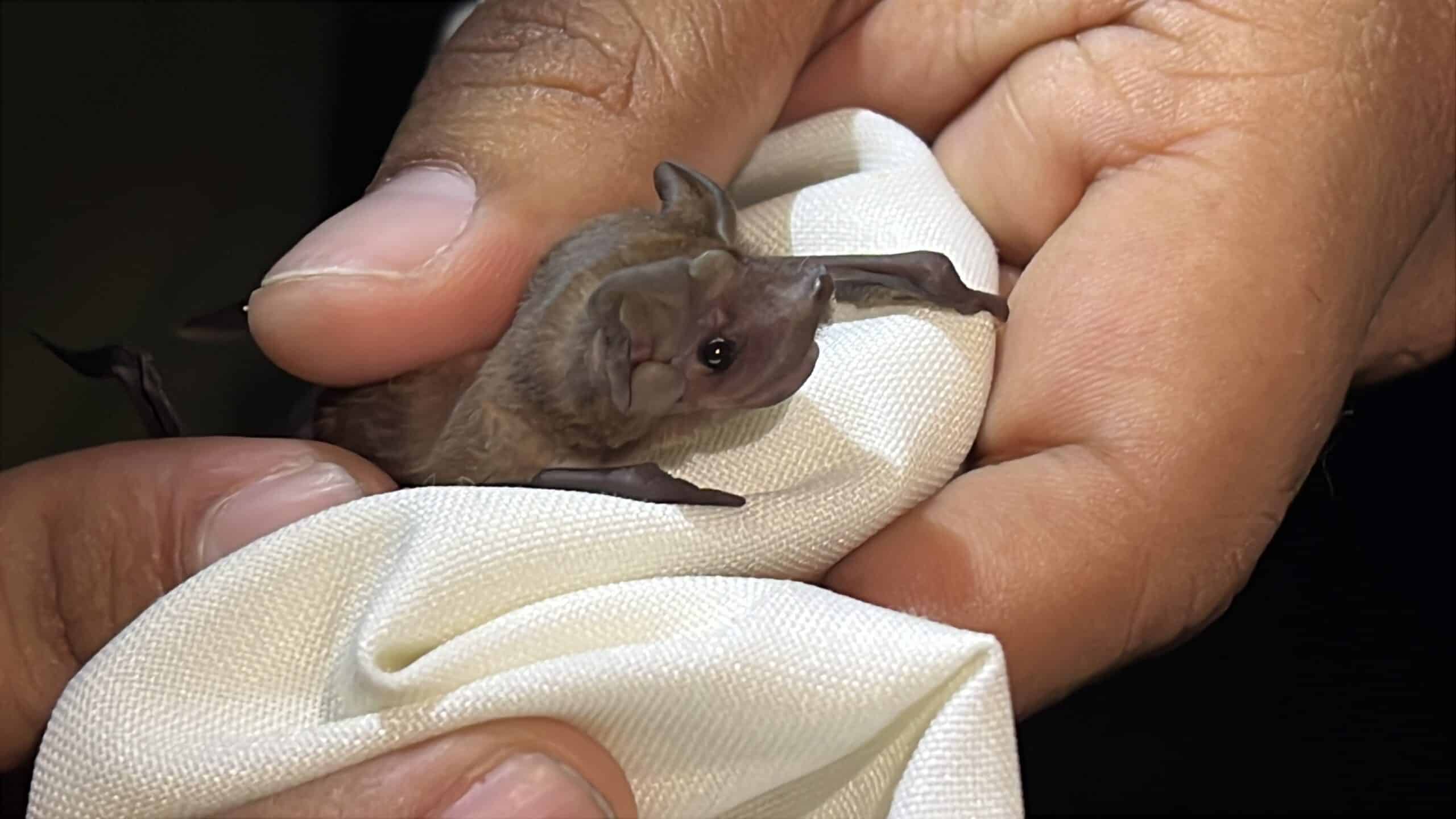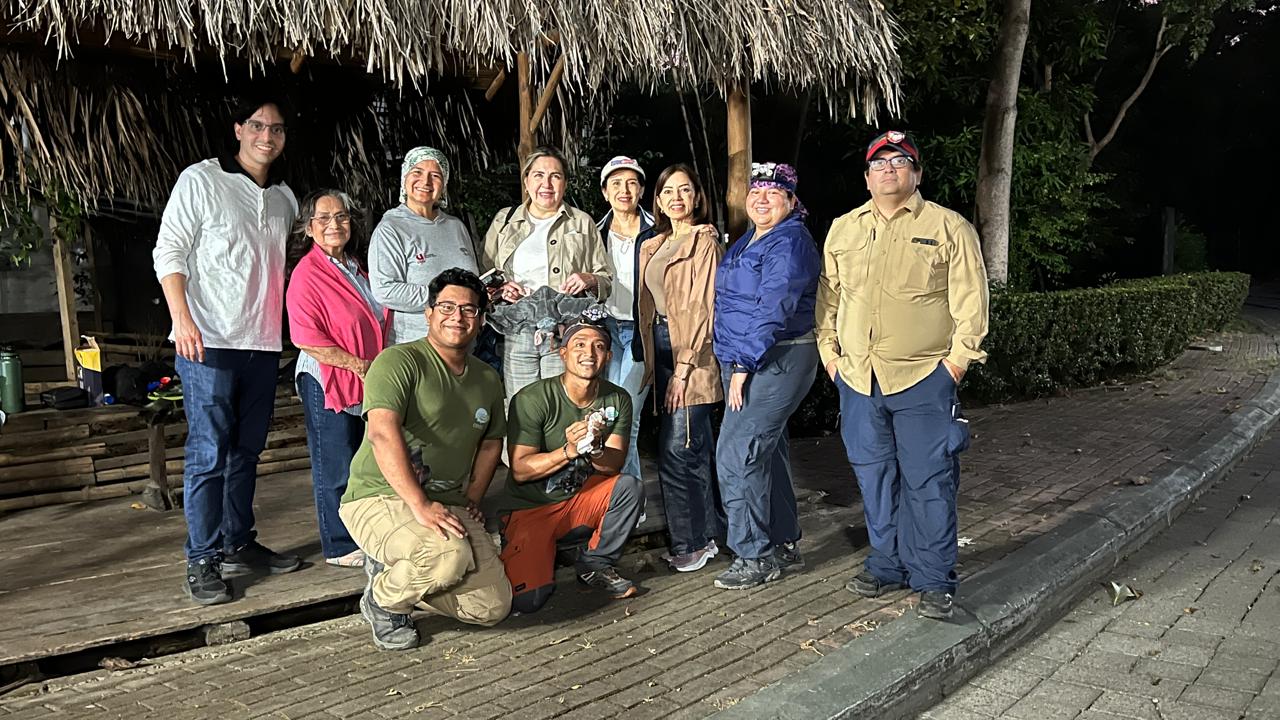



Contrary to the common idea that bats are pests, a revolutionary research conducted in the mangroves of Santay shows that they are true guardians of the ecological balance. The study, led by Natalia Molina, UEES research professor in the Sustainable Biodiversity Research Program from Mangrove to Coral 2021-2050, was developed in collaboration with researchers from the University of Guayaquil, Jaime Salas, Tania Paz Andrea Au-Hing and Carlos Restrepo, an international expert from the Potosino Research Institute in Mexico, using state-of-the-art ultrasonic recorders to access the fascinating sound universe of three insectivorous species. The results were published in the prestigious Revista de Biología Tropical under the title «Acoustic characterization of the threatened bat Neoeptesicus innoxius (Chiroptera: Vespertilionidae) and two sympatric species in Western Ecuador», consolidating the findings as a scientific contribution of international scope.
During 30 nights of fieldwork between 2019 and 2022, the team recorded and analyzed 163 echolocation signals of Neoeptesicus innoxius, a vulnerable endemic species of western Ecuador, in addition to studying two other widely distributed species: Myotis nigricans and Molossus molossus molossus. The researchers found that Neoeptesicus innoxius has an extraordinary adaptive capacity: it intelligently modifies its acoustic emissions according to the environment in which it moves, combining fast modulation (FM) and quasi-constant frequency (QCF) components to adjust to both complex mangrove mazes and the open spaces of grasslands and wetlands. This acoustic plasticity underscores its evolutionary ingenuity and its importance as a natural biological controller. The fieldwork also generated a significant social impact: the researchers connected with the local community, especially with children from Santay, transmitting scientific knowledge and dismantling ancestral prejudices that have unfairly stigmatized these animals for generations.

This research marks the beginning of an ambitious goal: to create the first regional «sonoteca», a reference library that will house all the sounds of Ecuadorian bats. This sound archive, along with detailed descriptions of the spectral and temporal parameters of each species, will become an invaluable tool for future research and for the design of effective conservation strategies adapted to each habitat. Santay Island, recognized as an Important Area for the Conservation of Bats (AICOM), now has acoustic references that will allow more precise monitoring programs, including not only the mangroves but also the grasslands and wetlands where these species feed and move. The initiative led by Molina and his interdisciplinary team demonstrates that true biodiversity protection begins with in-depth knowledge of our native species, inviting us to listen, understand and value those who fly in the dark.