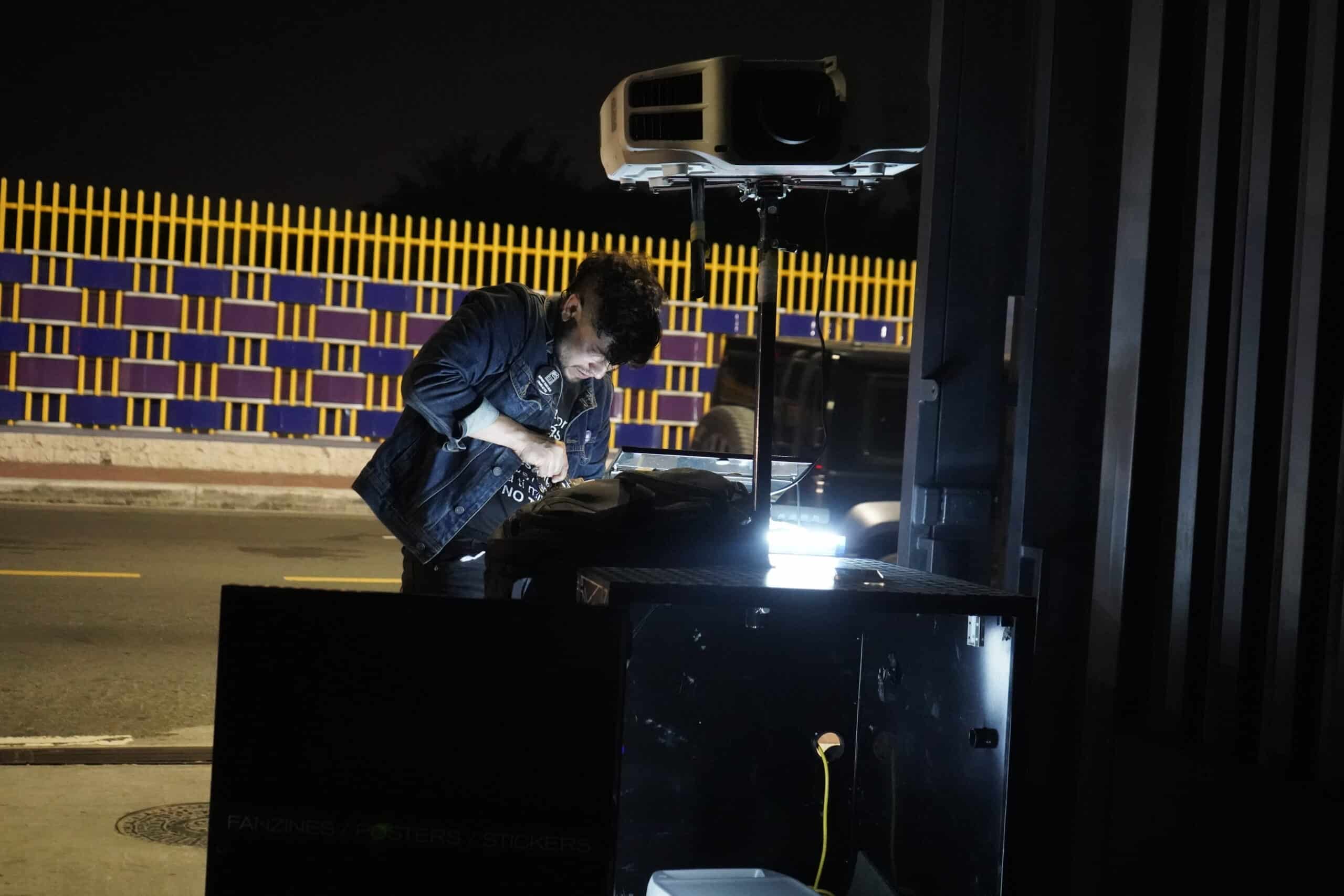


The Espíritu Santo University, in partnership with the Mayor's Office of Samborondón and Proarte, celebrated the 70th anniversary of the cantonization of the territory with the «Route of Lights», an event that merged art, technology and collective memory through video mapping.

This innovative technique of light projection transformed one of the institution's emblematic buildings into a monumental canvas where works by Ecuadorian artists narrated the history of Samborondón yesterday and today, reconnecting the community with its cultural roots. UEES thus demonstrated that its commitment goes beyond professional training, positioning itself as an active guardian of local heritage and promoter of cultural experiences that rescue the canton's identity.
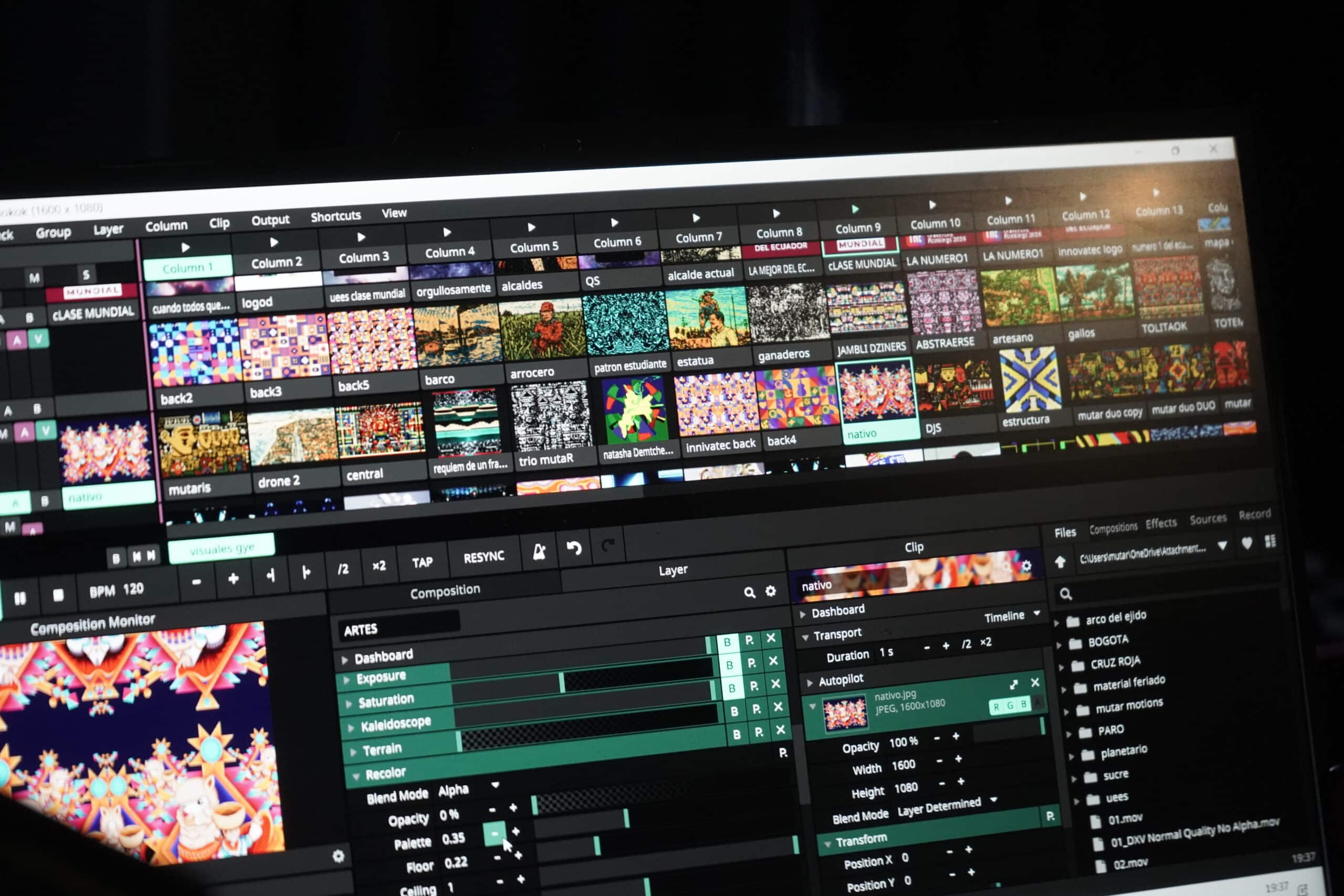
The heart of this celebration was the master class «From Poster to Visual: MUTAR with Identity», given by Tito Torres, Ecuadorian graphic designer, visual artist and teacher recognized for redefining ancestral identities. Torres presented his project MUTAR, born from research on the pre-Columbian culture of Jambelí and other cultures of the southern Ecuadorian coast. This initiative began as a documentary that preserves the legacy of an ancient culture threatened by coastal erosion and evolved into an artistic reconstruction that fused the ancestral with the digital. His work, exhibited at the Museum of Contemporary Art of Guayaquil and the Alliance Française, proposed to understand design as a living cultural tool, capable of transforming from paper to light, from the object to the collective experience.
«We want art to be free, to reach everyone and to be lived as a collective and transformative experience,» said Torres about his project Mutar Móvil, which democratizes access to art by intervening in public spaces. UEES, by hosting this initiative as part of the canton's anniversary, reaffirmed its commitment to a comprehensive education that values the past and celebrates the present. This event positioned the university as a space of encounter between pre-Columbian history and contemporaneity, consolidating UEES as a cultural reference in the region.