


For more than two millennia, a certain familiarity with mathematics has been considered an indispensable part of a person's intellectual formation. Moreover, mathematics is a body of knowledge that progresses continuously and whose fundamental function is to describe the world by solving practical problems, in addition to its interaction with other knowledge.
However, in everyday life, mathematics is always used, but not even thought about. Mathematics is a very important tool for life, as it is the key to success in all fields and surrounds us everywhere. They exist in various forms, for example, whenever you make a phone call, change the channel, when you travel from one place to another, when you handle money, etc., in all those jobs mathematics is involved unintentionally.
Thus, in most of the activities that are performed, basic or advanced mathematical concepts are used depending on the training and more on the jobs or trades that are performed. Many (problem) solving techniques were discovered through mathematical discussions or through mathematical activities involving real objects.
There is no doubt that mathematics exists in everyday life, but not all of it is obvious and not all people perceive it in the same way. The search for mathematics in everyday situations has a dual motivation. On the one hand, to understand the situation in question; on the other hand, to learn mathematics inspired by life.
Mathematics makes life easier and more orderly to avoid chaos and confusion. Certain things, qualities and skills promoted by mathematics are problem solving, creativity, critical thinking and the ability to reason and communicate effectively. There are many applications of mathematics in nature, industries, banking sectors, technology, especially in research fields, etc. For example, it is also used in genetics and statistical analysis. To maintain the quality of education, the development of interest in mathematics is essential.
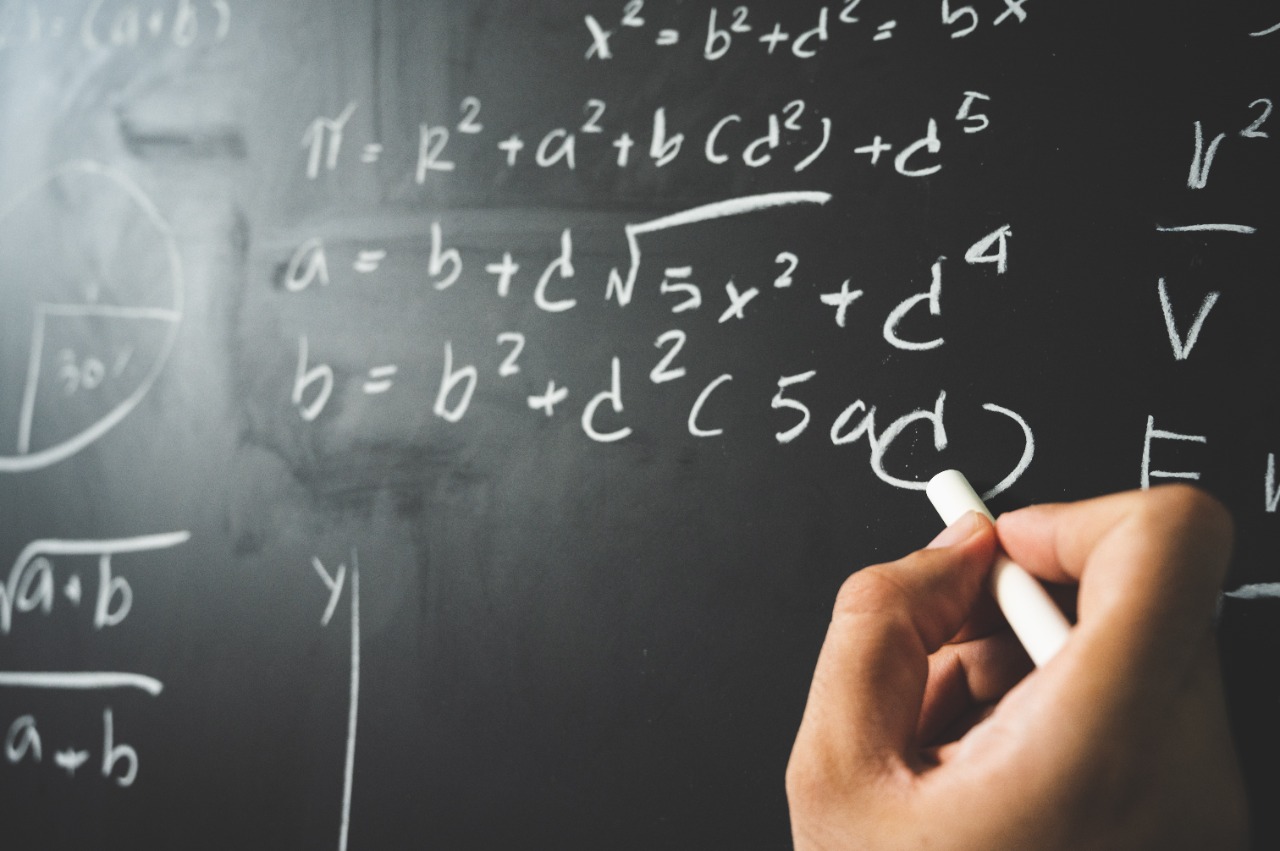
Mathematics also generates emotions for various situations by receiving numbers as a result of the ups and downs of various activities. Addressing everything in the form of numbers, enhances feelings for the achievement of goals, sometimes to be happy and motivated by a goal if they get lower values. These measurements establish right or wrong, good or bad, plus or minus, high or low, gain or loss, etc. And yes, mathematics is a science. Science of behavior, Science of motivations, Science of results and Science of numbers. Through it, information is reliable for different fields. It also gives criteria on how to deal with critical or unfavorable situations. Mathematics generally includes arithmetic, algebra, geometry, trigonometry, calculus, statistics, topology, geodesy, Fourier analysis, game theory, set theory, number theory, systems analysis, vector analysis, etc.
A good knowledge of all these fields is required to obtain degrees in the following areas: i) Physical sciences (such as physics, chemistry, engineering); ii) Life and health sciences (such as biology, medicine and pharmacy, psychology, nursing); iii) Social sciences (such as economics, business and commerce, anthropology, communications, geography and geology); iv) Technological sciences (such as computer science, networking, software development).
Faculty of Engineering UEES