


Urban space is the reflection of a society, which develops based on the realities of its individuals. Throughout history, the public space has been the scene of the life of the inhabitants of a city, of cultural expressions, of protests, but also the space destined to the enjoyment of the citizens.
Just as different aspects have been affected by the COVID-19 pandemic, public space has been no exception. During the beginning of the pandemic, streets used to pedestrians became empty streets, parks and squares without children and adults. This is when it becomes essential to remember that the inhabitants of a city are its protagonists, and without citizens there is no city. This consequence produced by the confinement, allowed to recover the importance of the use of public space, and in addition, to rethink its development. As Norman Foster mentions, historically cities emerge from crises, regardless of whether they are pandemics, plagues, earthquakes or fires. Thus, in cities like London or New York, after the cholera epidemic, there was a great growth of different urban facilities for the benefit of its inhabitants.
With the passing of the months, and the reactivation of different activities, changes in the use of public space are beginning to be noticed, considering the pedestrian as its main actor. It is no longer unusual to see the sidewalks taken by furniture of private premises, which provides a greater relationship between the public and the private, or the interior and the exterior. Beyond offering an experience to the user, providing an outdoor space, safer in terms of biosecurity measures, it allows direct contact with the city, thus creating a sense of belonging.
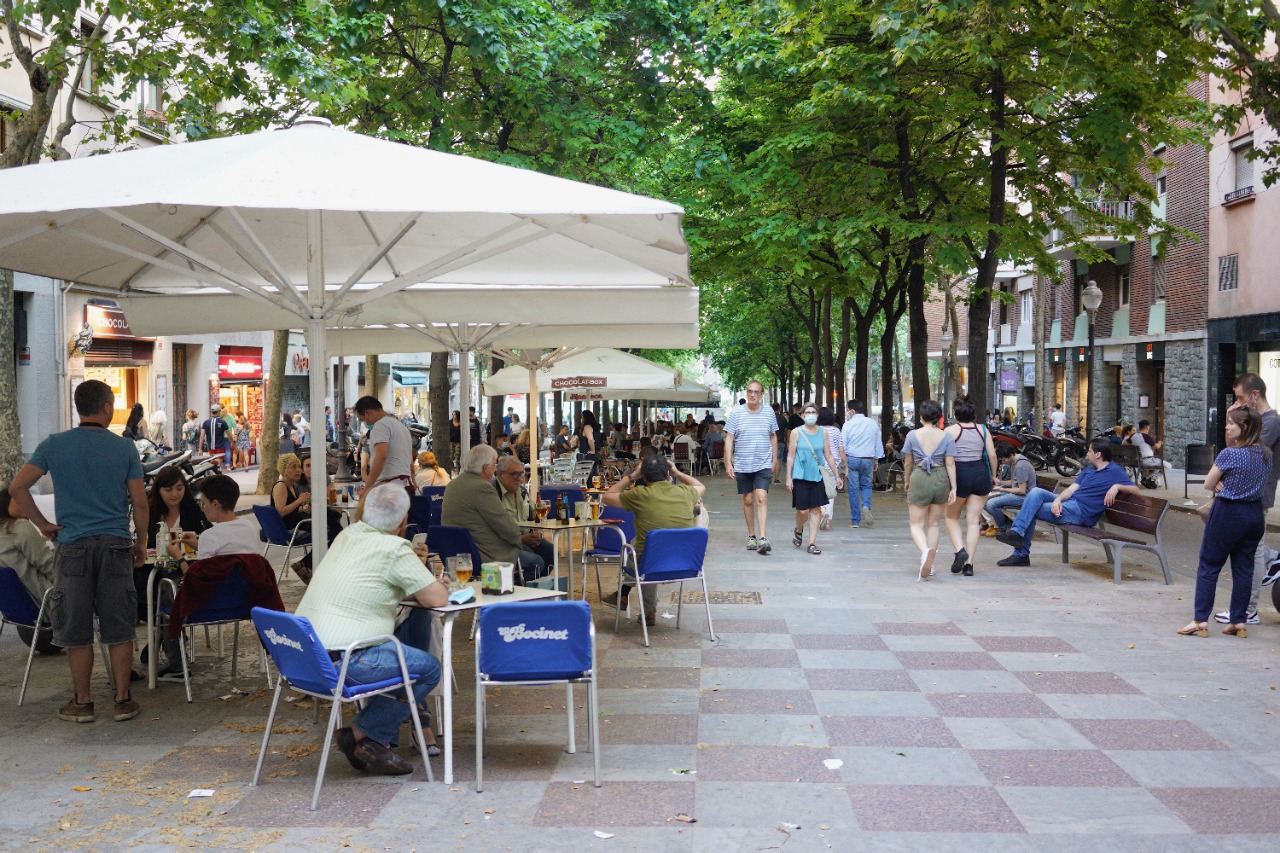
Cities should not become places where people pass through, they should be the stage for their lives. Circumstances have accelerated trends (teleworking, online shopping, etc.), which are not new, but have been magnified. Although cities have already been rethinking cities with spaces for pedestrians, today it is thought and demanded by the inhabitants, cities with more green areas, with more squares, with more spaces for sustainable transport, spaces that can offer, through the use of technologies, new experiences.
The city is the stage for social encounters, and urban art is an essential part of this. Generating spaces or allowing urban artists to show their art and skills in safe places, generates an empowerment of public space, while promoting art in our city, without exposing their lives and those of the spectators in a vehicular space. Likewise, these actions provide, once again, experiences to passersby who seek to recreate themselves in the streets of the city.
Cities should be the response to comprehensive projects, so that the vision of a city desired by all can be achieved: an inclusive, sustainable, resilient and safe city.
Natalie Wong Chauvet
Dean Faculty of Architecture and Design