

By Jorge Andrade
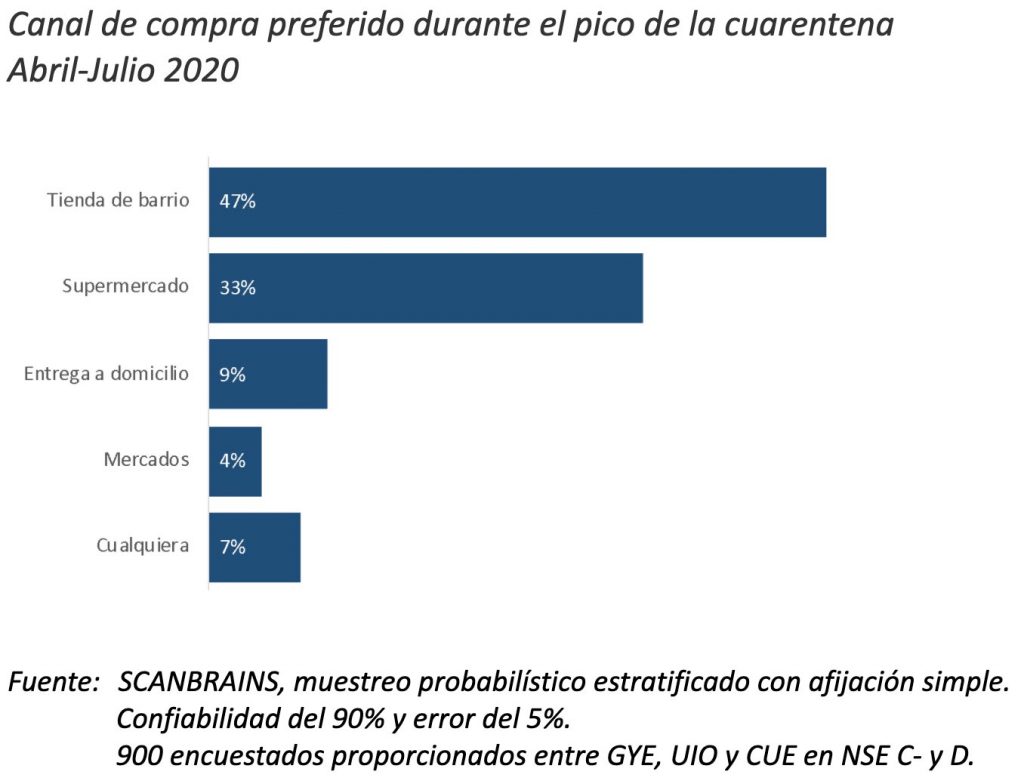
There are approximately 123,000 stores in Ecuador, of which 84% represent the only economic livelihood of the families that have ventured into this business. This commercial channel represents between 65 and 80% of the sales of mass consumption companies and are categorized by micro-market type access stores, counters with and without bars, and windows. They are icons of social bonding in neighborhoods of lower-middle and lower socioeconomic levels, where neighbors gather to talk and learn about everything that has happened in the neighborhood, a tradition that the pandemic changed dramatically, not only blocking these pleasant social gatherings, but also causing the closure of almost 63% of these outlets nationwide during the quarantine, due to the shortage that was generated in the first months of the pandemic, due to the operational collapse of the distribution chain of basic necessities. The impact, after one year of the pandemic, has been the permanent closure of almost 17% of the country's stores.
At the height of the pandemic, people sought to move as little as possible to avoid the risk of contagion. Thus, the neighborhood store became the main center for the replenishment of goods that had been depleted in the household cupboard, and the shopkeeper became the savior, who was available as often as necessary, making the situation more bearable.
The COVID-19 pandemic generated changes in purchasing habits and consumer behavior, who sought geographic proximity. The purchase dynamics was more rational than impulse buying, the presence of buyers with lists of products was notorious, resulting in drastic drops in trips for indulgence and consumption of the moment. In addition, the suspension of school activities eliminated the children's lunchbox trip, affecting sales of small personal formats, forcing brands to implement family sizes in this type of products.
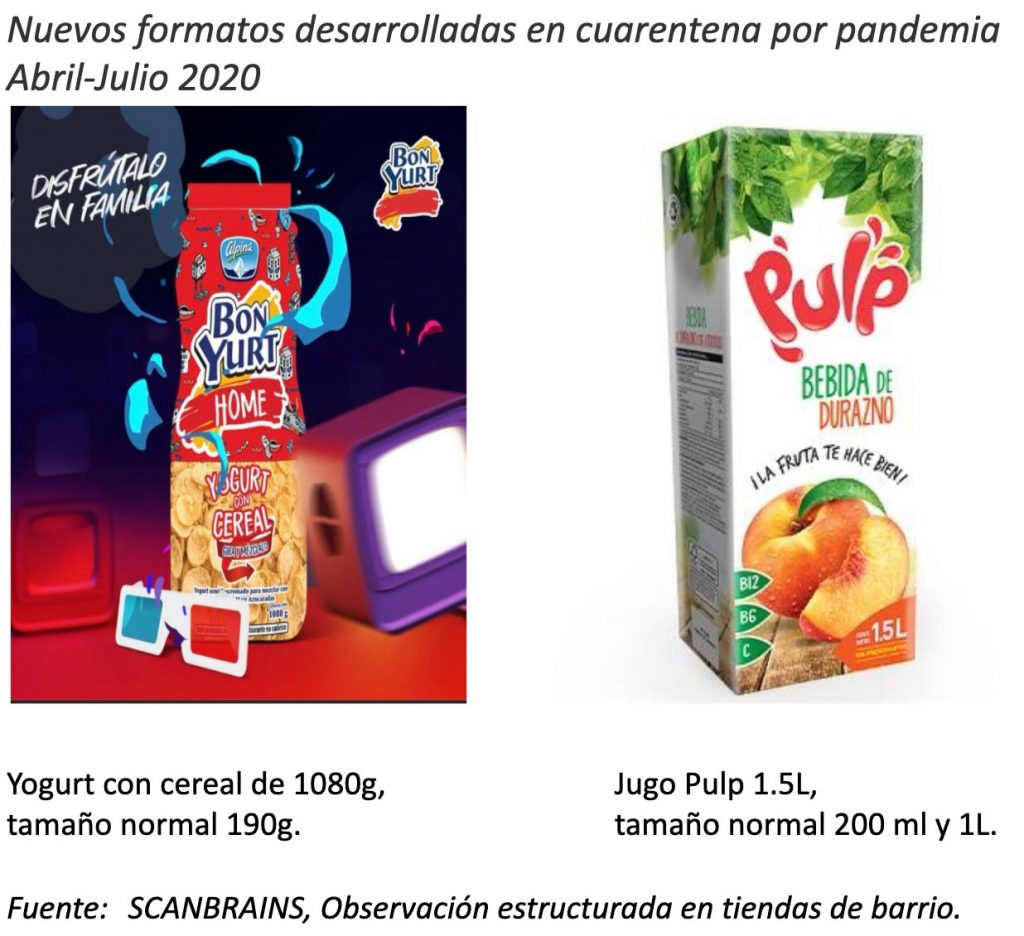
The kitchen became a place of family unity, transferring the indulgence that was provoked in the store to the home, through the preparation of specialized recipes of salt and sweet. Products were sought that would make food preparation easier and more practical, mainly in the mid-afternoon and evening. The purchase of household cleaning products became just as important as basic necessities, since the aim was to permanently disinfect the areas where people entered their homes.
Due to the emergency, buyers bet more on having products than on their preferred brands. Some brands that did not have high rotation were immediately marketed due to their availability, taking the position of those that had exhausted their stock due to shortages. In many companies, brand loyalty indicators declined significantly, which is why they had to activate their communication strategies focused on the purchase and consumption segments, because not everyone was able to visit the points of sale, and children regularly did not leave home.
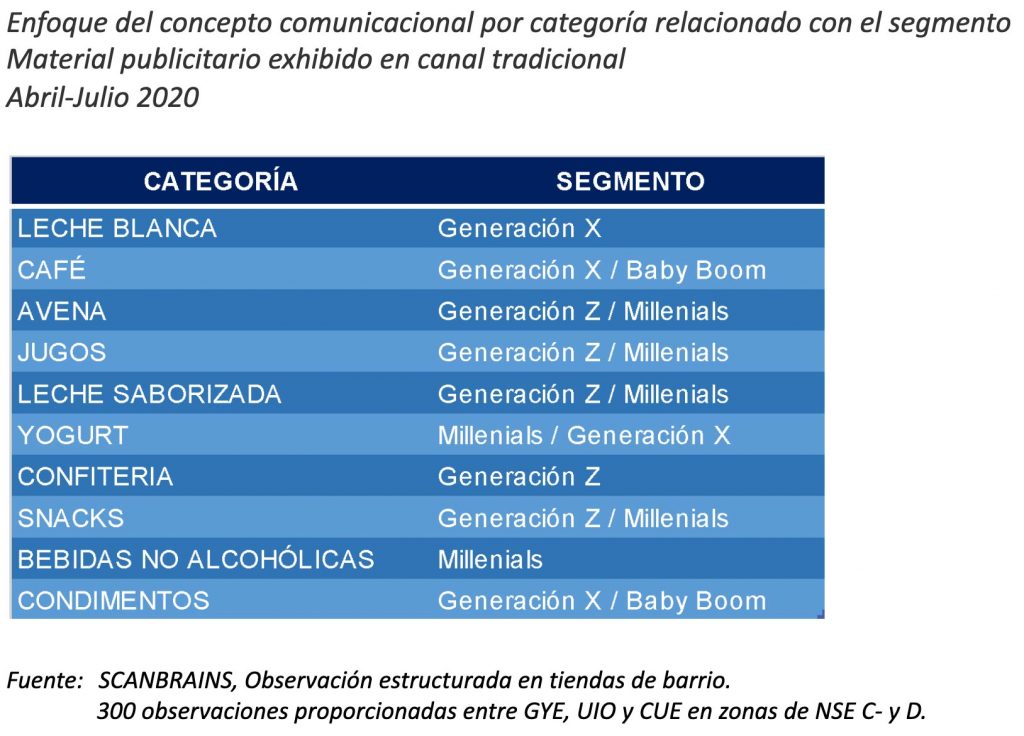
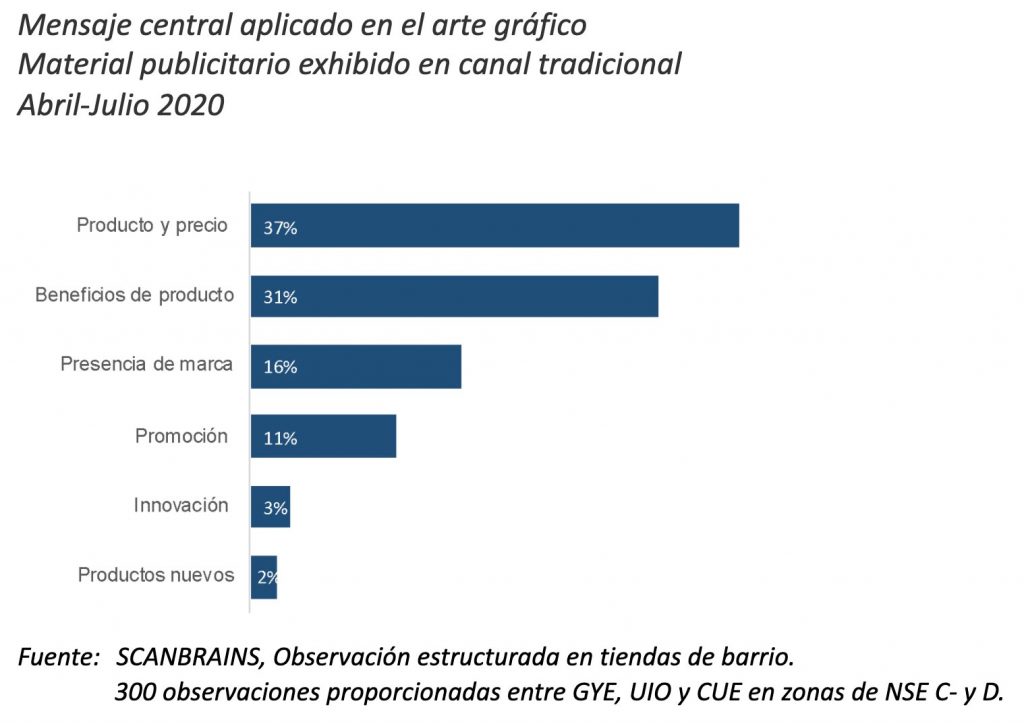
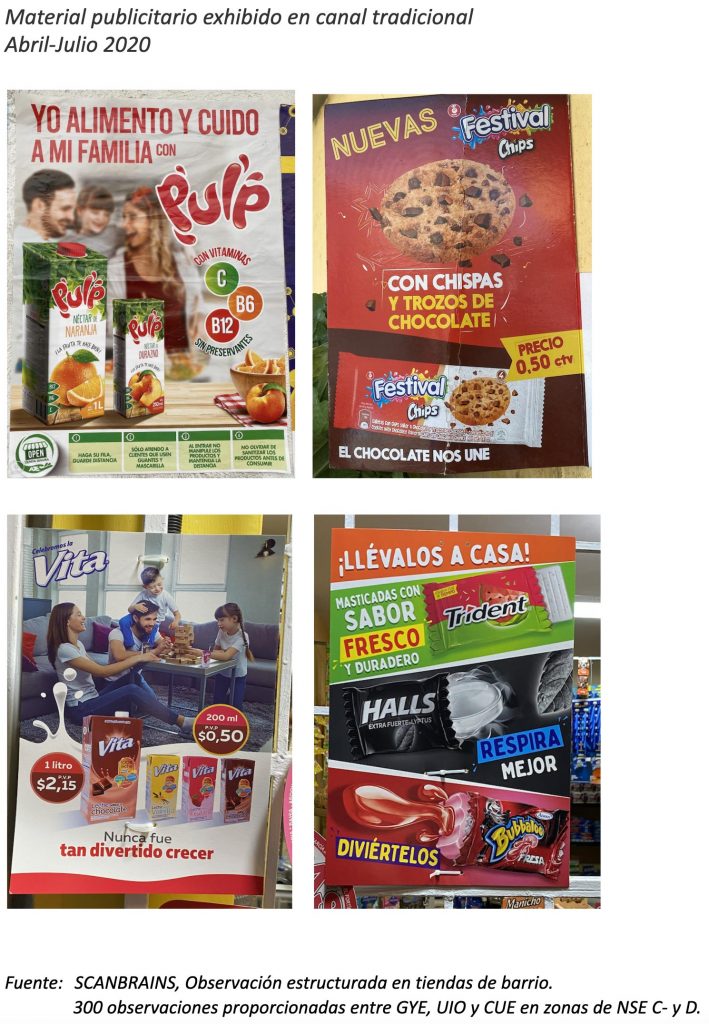
The central message of the advertising material focused on communicating the benefits of the brands, family unity and the care that the pandemic demanded, concentrating on phrases such as: (i) Take them home, (ii) Growing up was never so much fun, (iii) Chocolate brings us together, (iv) Enjoy the natural, (v) Cooking at home is so much fun and (vi) Biosafety communication.
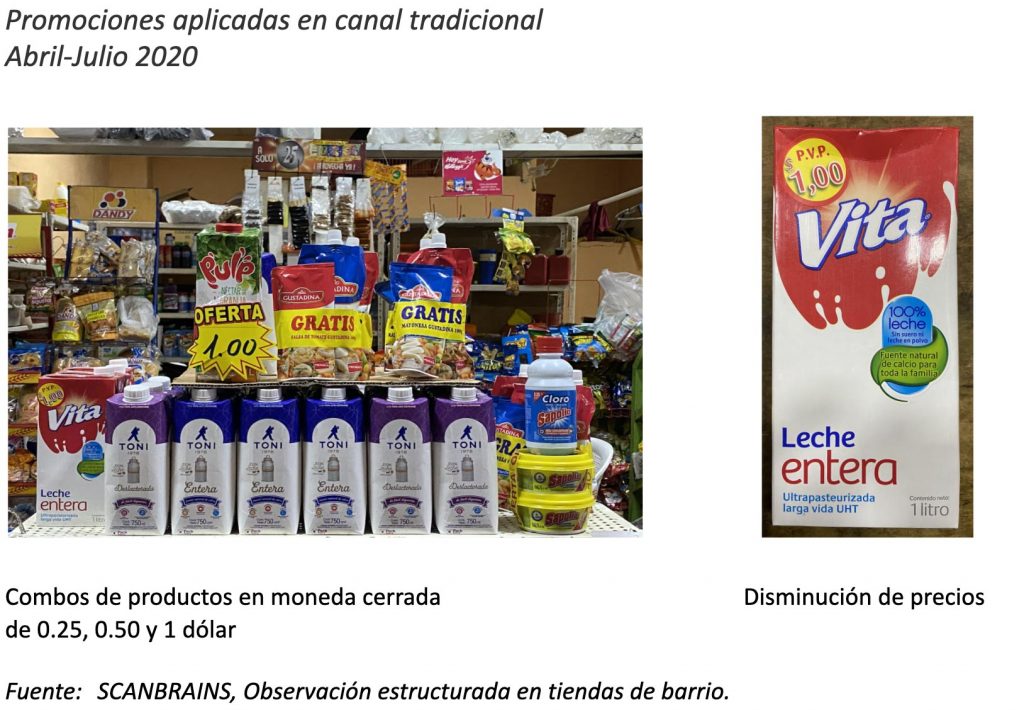
The promotions implemented during the quarantine were focused on providing in-situ and direct benefits to the buyer, such as: (i) price reductions, (ii) product additions, (iii) creation of closed-currency combos of 0.25, 0.50 and 1 dollar, (iv) bundling of products (on-pack). Promotions for redemptions at other sites were completely suspended due to the mobility restriction.
One year after the state of emergency and mandatory quarantine decree, the data do not show a total recovery of the traditional channel, even though this was the preferred channel during the most complex moments of the pandemic; however, the shortage caused buyers to look for other channels or other forms of supply, which is why brands have developed actions to promote this recovery and achieve the coverage that this channel provides.