

By Ricardo Roca
On a dry morning like any other in Carpuela, I find myself sitting on a school bleacher next to Abel's father and I ask him: "What do you think of this school? He responds with an emotion that overflows him:
“For me it is a gift from God, before I had to raise my son's hand to get him to go to school, today he is the first one to get up and he lifts us up so we can take him early.”.
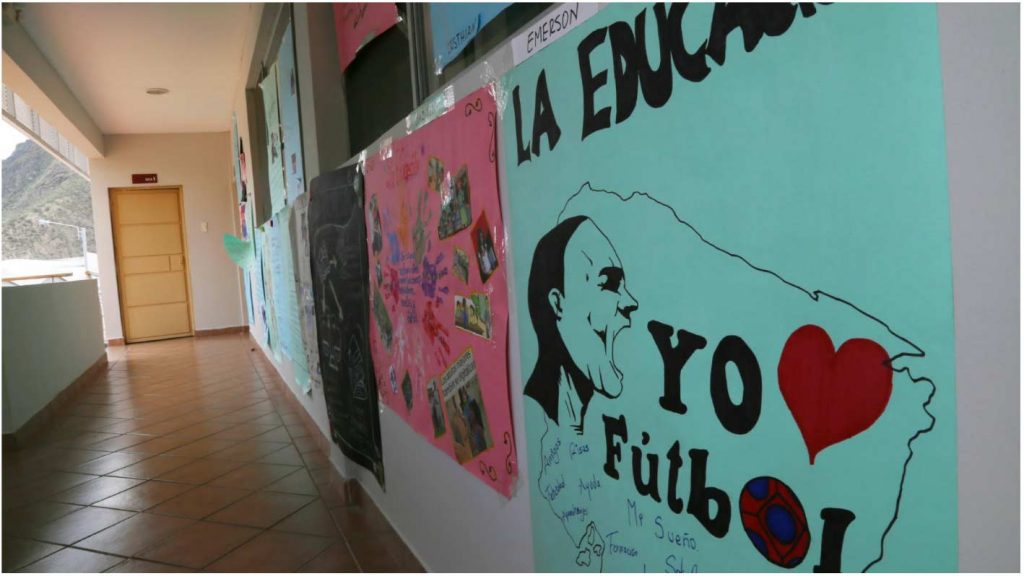
The vast majority of parents have experienced this situation at some point, when their children simply do not want to go to school, when the professors do not offer them the necessary motivation to overcome the laziness of getting up at dawn. Parents, worried about their children's future and their own, insist on their dedication to obtain the longed-for bachelor's degree. For them, being a chemist-biologist, physicist-mathematician, social scientist or any kind of scientific specialization is the basis for a promising career.
Other representatives, on the other hand, see the technical high school as an opportunity for their children to enter the labor market quickly: accountants, electricians, agronomists; they leave these institutions ready to work, often driven by family need and the benefit of generating income, leaving aside their personal interest or their innate abilities.
The Chota Valley is a soccer community, internationally known as a soccer quarry. From here have come great professionals who have paraded their skills around the world. It is to be expected that the great majority of children want to be the next Edison Méndez or Ulises de la Cruz, but what they do not consider is that for every Agustín Delgado who achieves it, hundreds of aspirants remain anonymous.
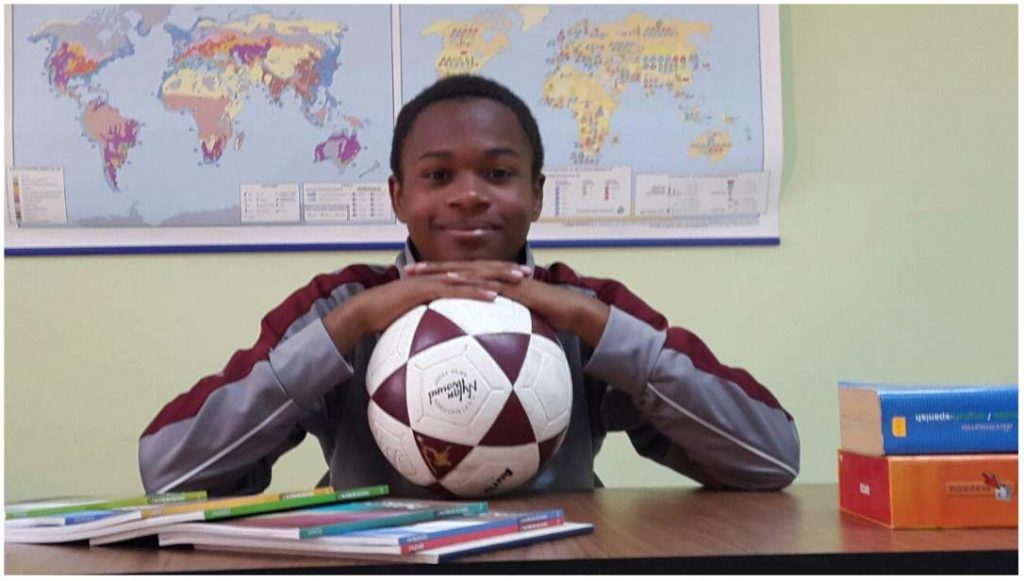
And so life goes in the Valley, hundreds of children as young as 12 years old live with the pressure to forge a career in soccer, to support their families and contribute to their community. Convinced that it is the only thing at which they can excel. Forced to leave home and school to try their luck in the big teams of the capital, where out of 100 that arrive, maybe one makes it, the rest keep trying, passing from one team to another without luck, reaching a ripe age for this sport, finding themselves at the end of a career that never began, without soccer, without family, without studies, without a chance in life.
But what would happen if soccer, this activity that moves many Ecuadorian communities, were integrated into the educational environment of students?
Education, training, is not only about cultivating logical-mathematical or linguistic intelligence, which is the one we commonly relate to the professional aspect. Kinesthetic-bodily intelligence is the ability to use the whole body to express ideas and feelings, perform activities or solve problems (Del Pozo, 2013) and is as valuable as the others. In other words, being a scientist or a lawyer is as worthy as being a sports professional.
The innovative idea of a baccalaureate in soccer is based on the idea that a soccer player can improve his performance and professional performance if his soccer-specific training is integrated with other areas of study, in a contextualized pedagogical process, to benefit from the transfer and synergy of knowledge. And in an institutional environment where the actions are always socially responsible, in order to develop in young people social awareness and commitment. Students are admitted for their talent in soccer, to receive a quality education, oriented according to the specific needs of this sport. In this way, their talent, abilities, values and competencies are strengthened, as tools to develop with autonomy, responsibility and social commitment in professional soccer and throughout their lives.
The purpose of physical education as a school discipline is to train subjects endowed with critical capacity, able to act autonomously in the sphere of the corporal culture of movement and to contribute to the formation of political subjects with tools that facilitate the exercise of citizenship (González; Fensterseifer, 2010).
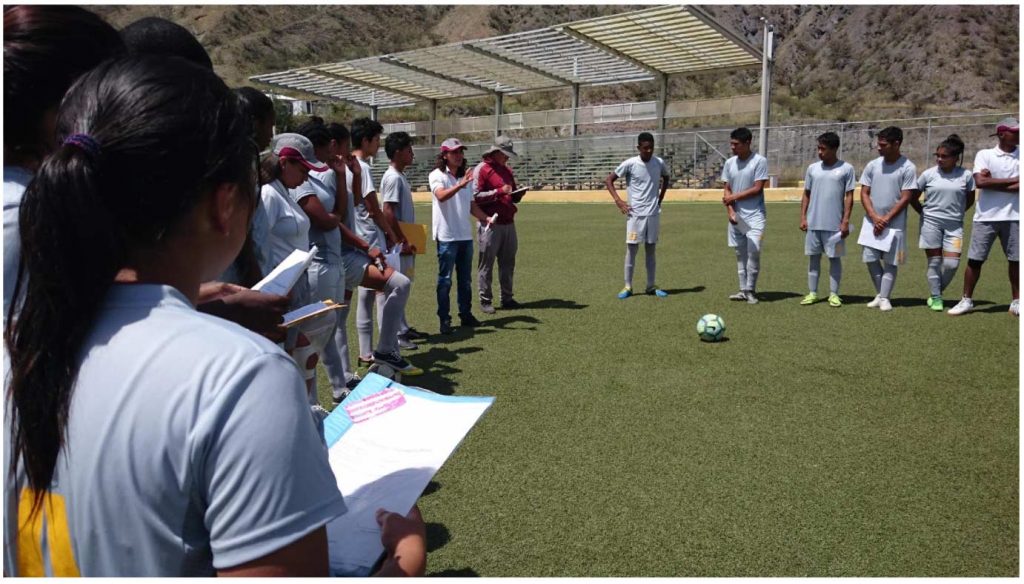
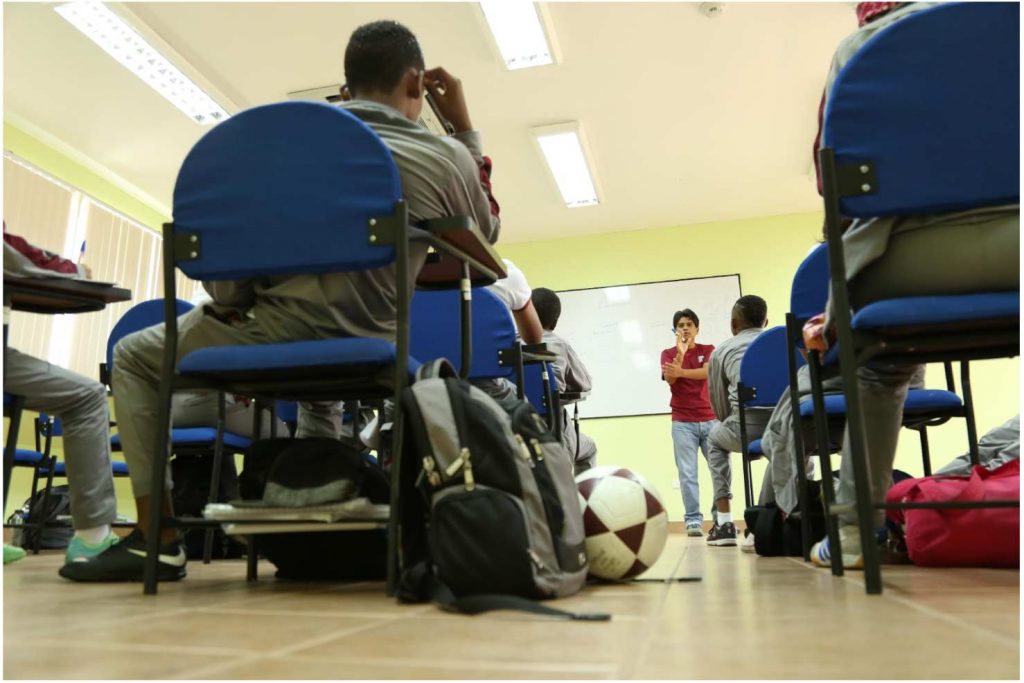
This proposal goes beyond strengthening physical education classes, a subject normally undervalued at school. The idea is not to study during the day and train soccer at night. It is about considering physical education, sport, as the main axis, as that transversal knowledge on which the educational proposal is based.
It means having soccer coaches and technical directors, not just physical education graduates. It means having doctors specialized in traumatology, psychologists and nutritionists. The goal is to see the soccer field as another classroom or the classrooms as an extension of the field, not to relegate physics classes, but to teach; for example: that the Magnus effect caused by Roberto Carlos' free kick in the 98 World Cup, is responsible for a ball's camber when it turns, but this trajectory can be modified by the incidence of the wind. In this way, students are able to include topics such as nutrition or tactics in their conversations. In short, the objective is to have soccer as the code of communication within the school, so that the students internalize it and make it their main motivation to exercise their education with responsibility.
The intention is to see soccer as something more than a sport, as an engine to improve society. The aim is to revalue soccer: that a child no longer has to choose between a ball or a book, and much less between his family or the field. The goal is to change the training of soccer players in the country.
Abel gets out of class and meets his father to travel two hours home. Abel is happy to have learned more about soccer through Physics, Mathematics, Biology and practice; he was excited to learn that at 16 years old he will play with his teammates in his first federated matches, his first professional practices. This time he did not make it to the youth pre-selection, but three of his teammates did.
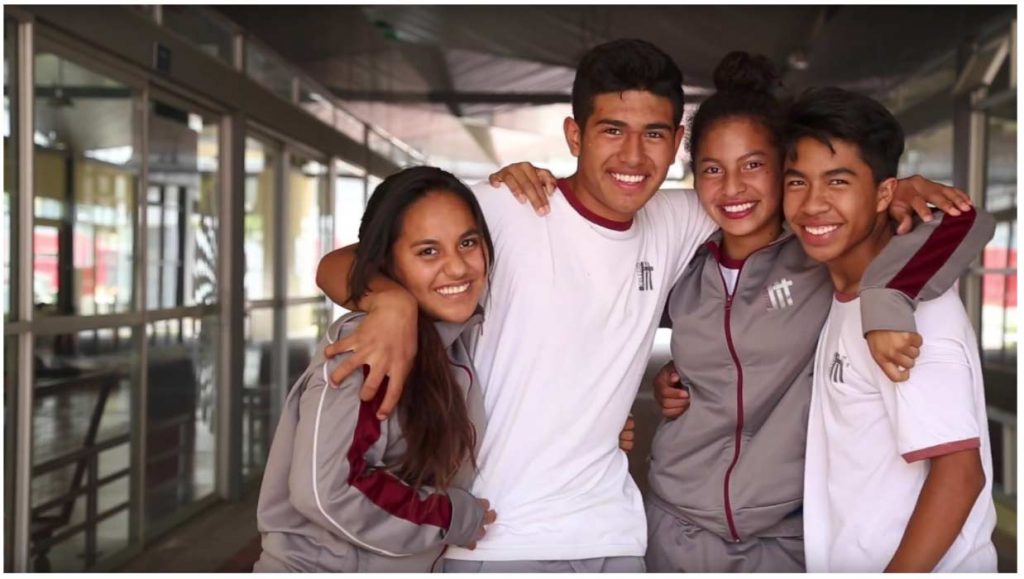
On the other hand, his father, aware that soccer is an unpredictable career, is happy because his son has increased his school performance by 40%, he has positively changed his nutritional habits and those of his family; he is pleased because he has transferred the discipline and fair play associated with sports to his daily life; and above all, he is satisfied to see his son training not only for soccer, but for a life after it.
Bibliographic references
Del Pozo Roselló, M. (2013). An experience to share. Las Inteligencias Múltiples en el colegio Montserrat. Barcelona: Tekman Books.
Gónzalez, F.J.; Fensterseifer, P.E. (2009). Entre o “não mais” e o “ainda não”: Pensando saídas do não-lugar da ef escolar I. Cadernos de Formação RBCE, v.1, n.2, p. 10-21.
Ministry of Education (2017). Formative offer of the Technical Baccalaureate. Retrieved 10 April 2021, from. https://educacion.gob.ec/wp-content/uploads/downloads/2017/08/oferta-formativa-de-bachillerato-tecnico.pdf.



I like the physical education career