
2nd UEES English Language Teaching Congress
The 2nd UEES English Language Teaching Congress brings together secondary school, university and private language academy teachers from across Ecuador’s coastal region — El Oro, Guayas, Santa Elena, Los Ríos and Manabí — and the southern highlands of Azuay for one full day of practical professional development at the UEES campus in Samborondón.
Under the theme The Re-imagined Classroom: Teaching Skills for the Future, the programme pairs two plenary sessions shared by every participant with nine specialised workshops — you choose three — led by speakers from UEES, ESPOL, International House Quito and National Geographic Learning. The day closes with a round table bringing those voices together.
Congress objectives
- Modernise teaching through applied AI. Demystify artificial intelligence in ELT by equipping participants with practical, actionable tools for lesson planning, task-based language teaching and AI-driven speaking activities.
- Raise learner motivation and autonomy. Introduce learner-centred frameworks that build engagement, from visual literacy strategies to bonding teaching and approaches that develop long-term learner independence.
- Foster regional collaboration and peer learning. Connect local educators from different institutions through networking spaces and a closing round table with expert speakers from UEES, ESPOL, IH Quito and National Geographic.
- Build practical pedagogical mastery. Give teachers classroom-ready methodologies in key language areas, including hands-on vowel pronunciation techniques, structured scaffolding for EFL writing and empathetic strategies for teaching low-level learners.
- Offer a personalised professional development pathway. A flexible structure in which all participants share two main plenary sessions and design their own learning route by selecting three specialised workshops from a total of nine.
Speakers
Plenary speakers, workshop leaders and hosts from UEES, ESPOL, International House Quito, Cambridge and National Geographic Learning.
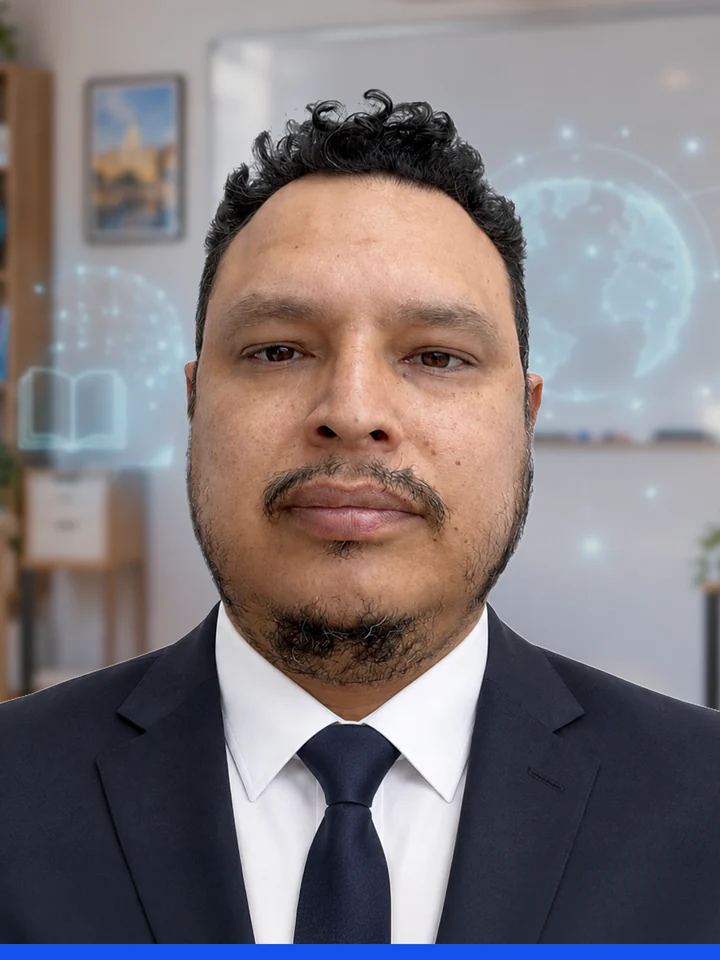
 Luis Cerón
Academic Consultant · National Geographic Learning
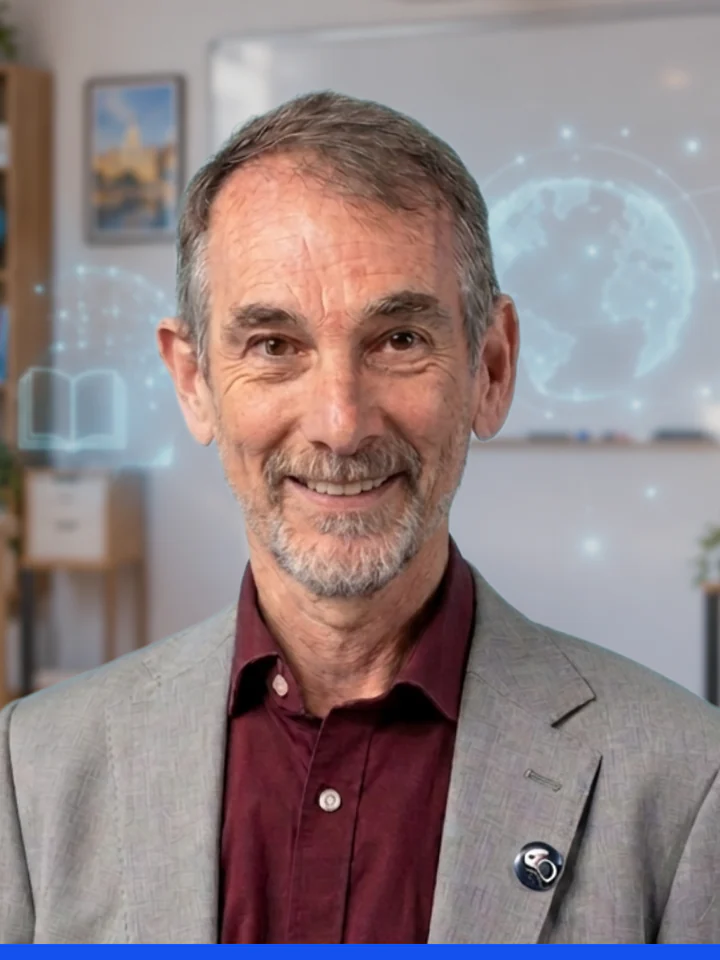
 Paul Woodland
Director of Studies · International House Quito
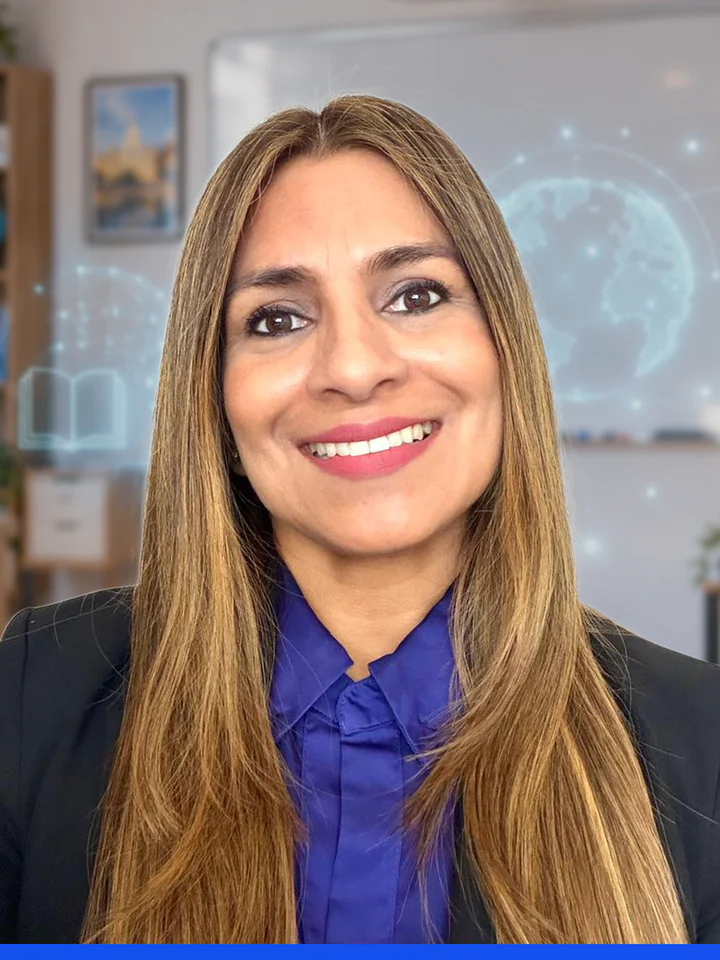
 María Eugenia Hidalgo
Professor · UEES

Edgar Zurita
EFL Teacher · UEES

Félix Estrella
Professor & Researcher · ESPOL
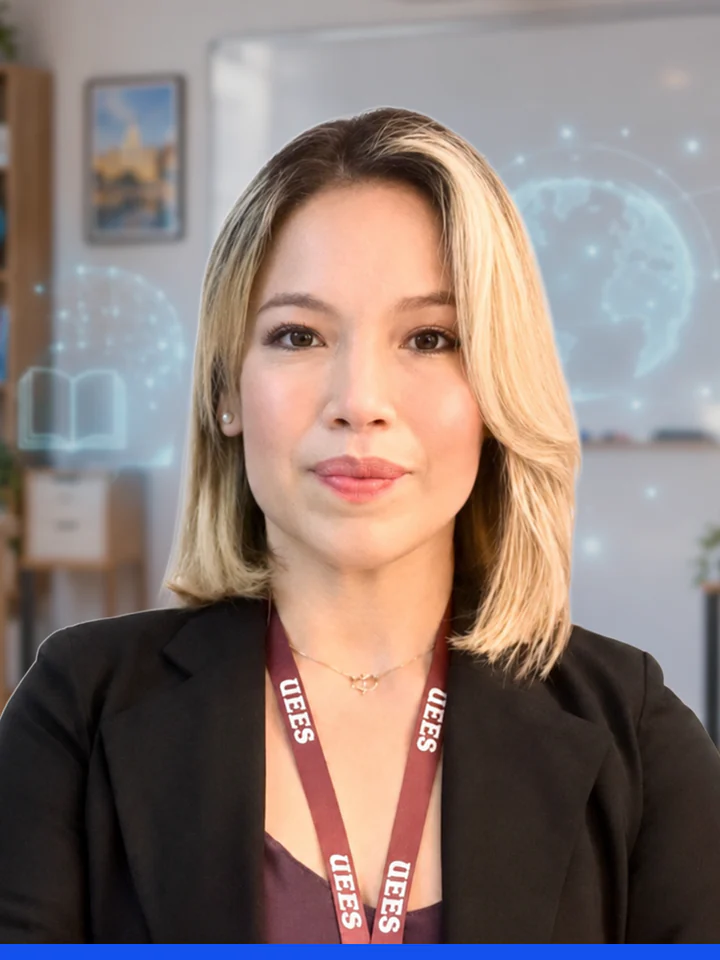
Alexis Contreras
Full-time Professor · UEES
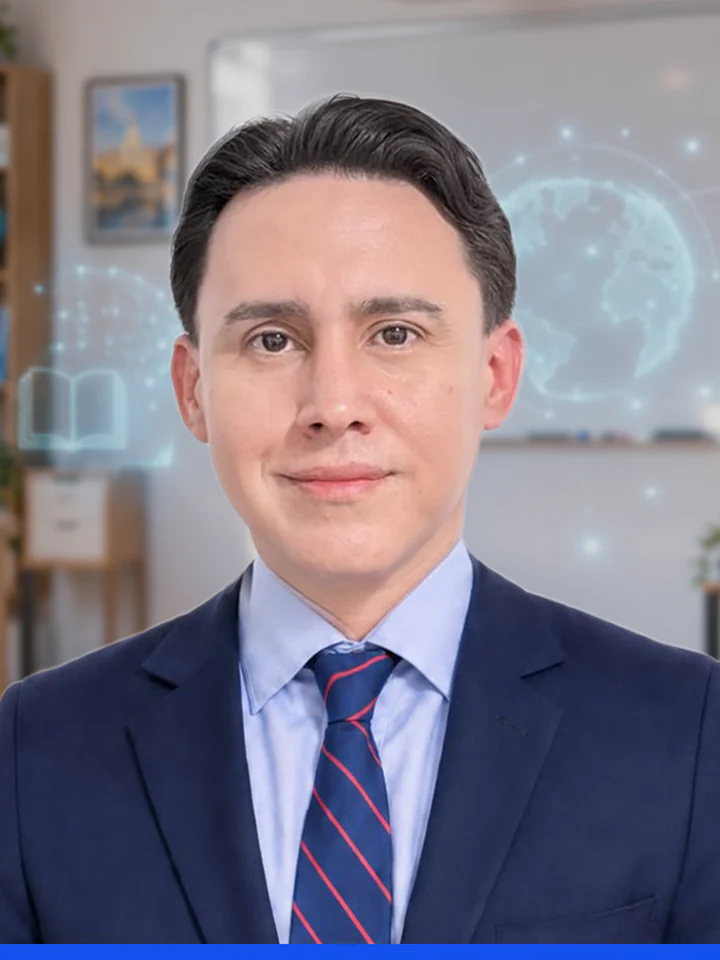
Mario Alvarado
Independent Researcher
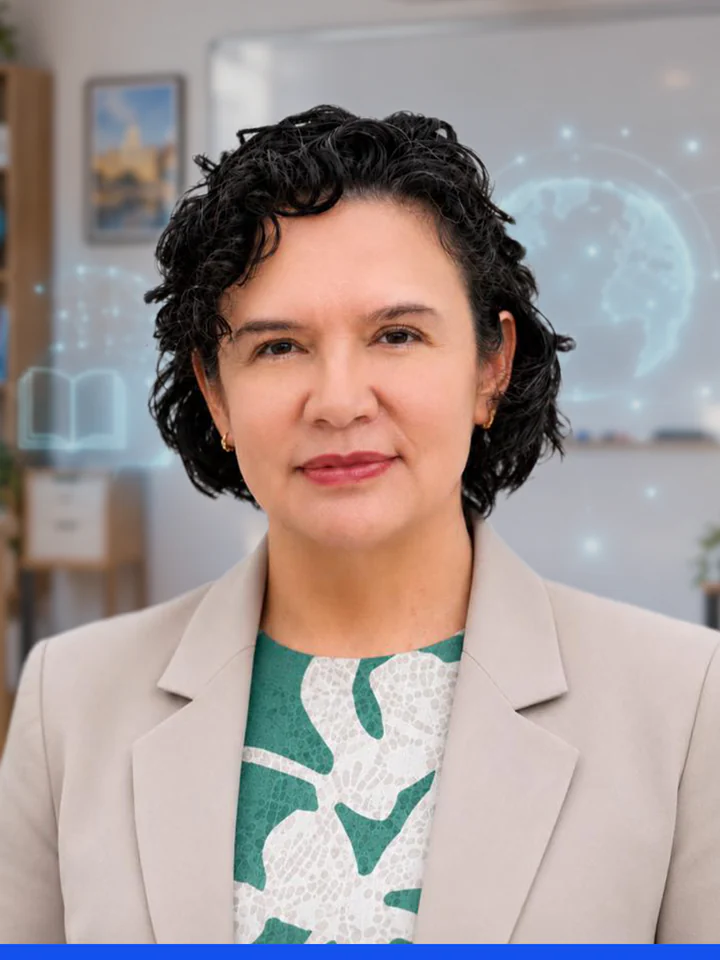
Penélope Sánchez
Independent Researcher
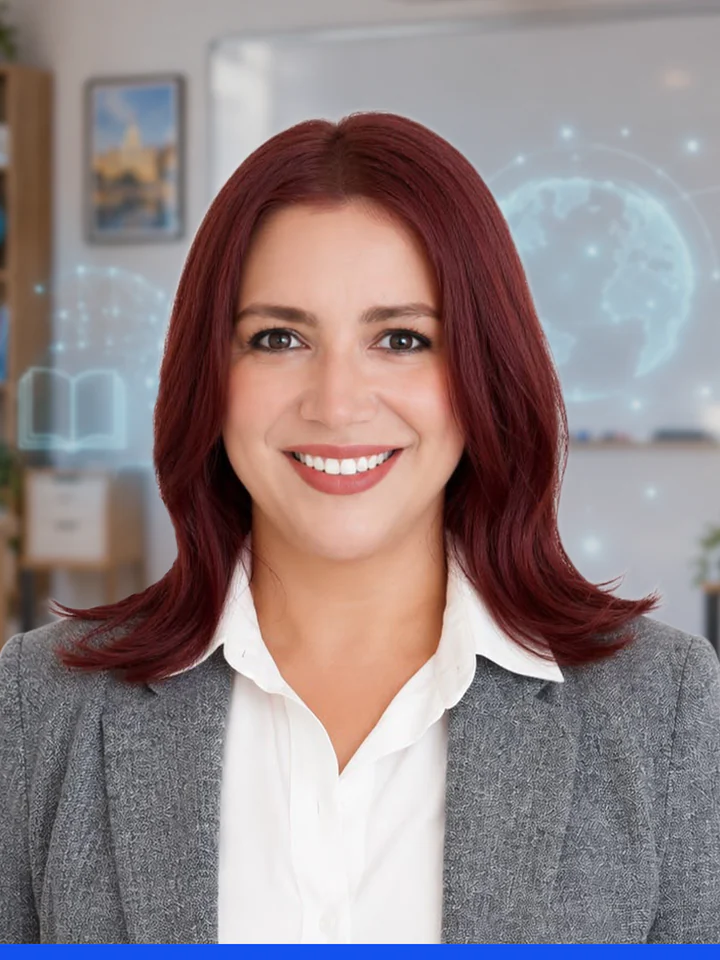
Sol Castello
Faculty Member · UEES
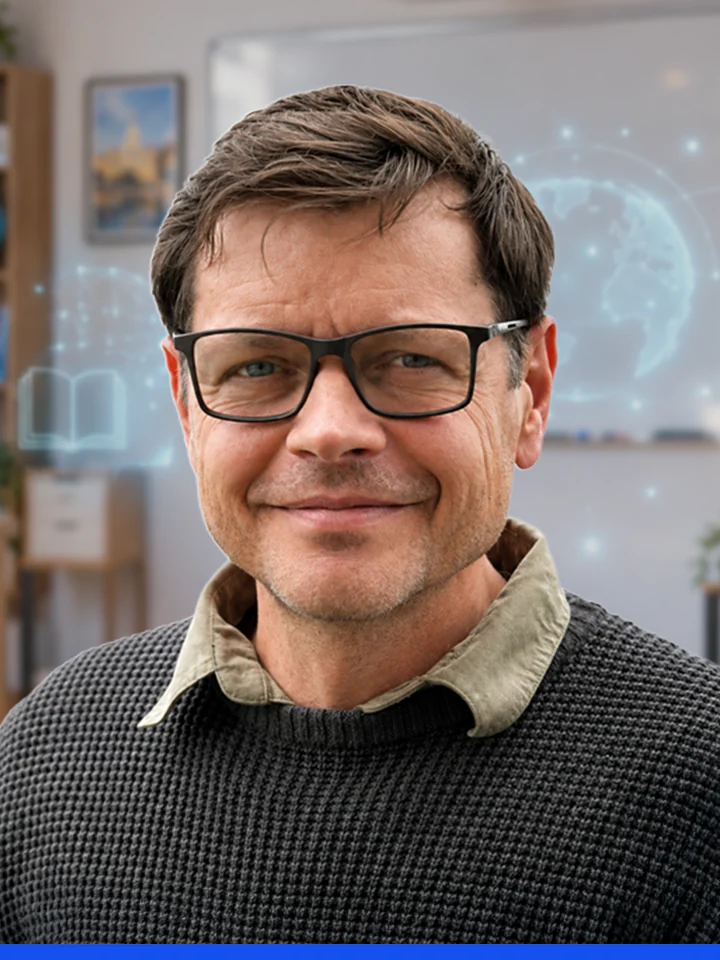
 Wouter Redelinghuys
CELTA Master Trainer · Cambridge
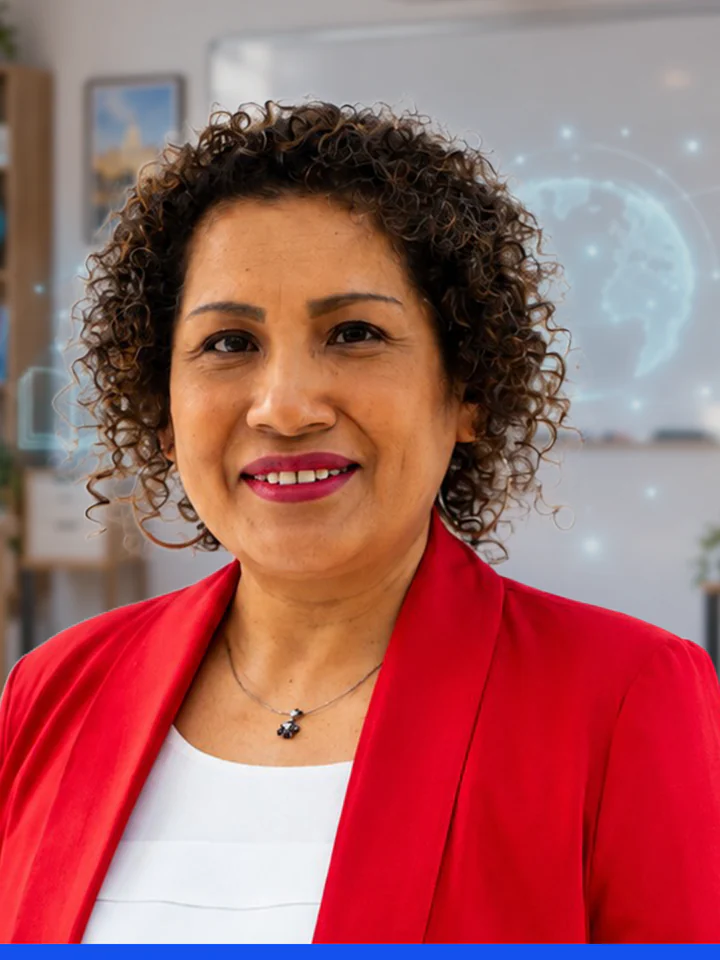
Jenny Villarreal
Assessment Team Leader · ESPOL
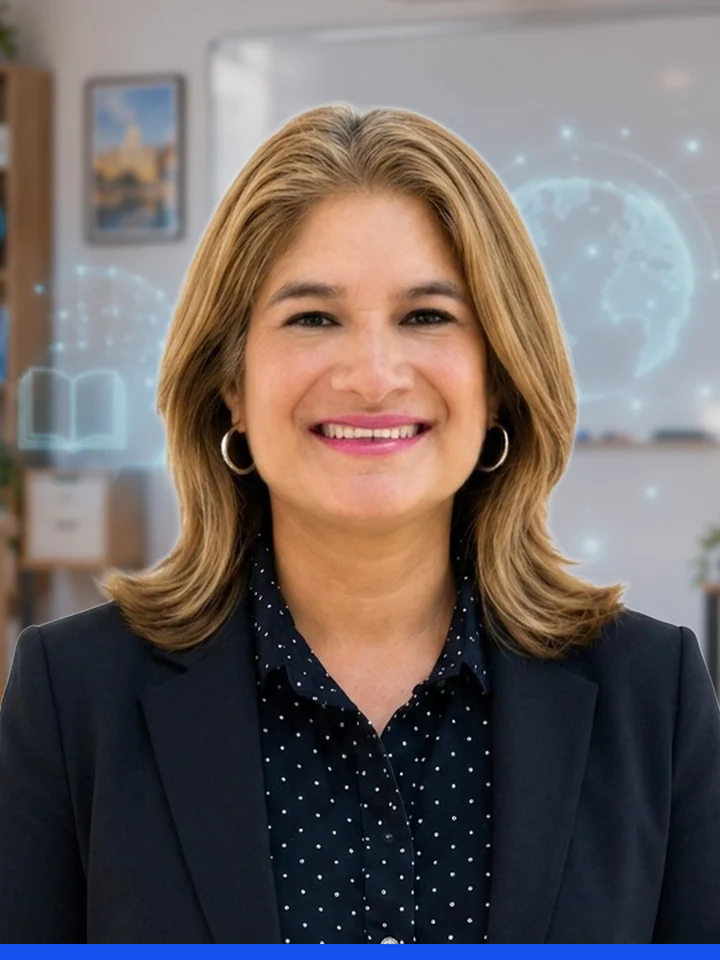
Janella Maldonado
Teacher Trainer · ESPOL
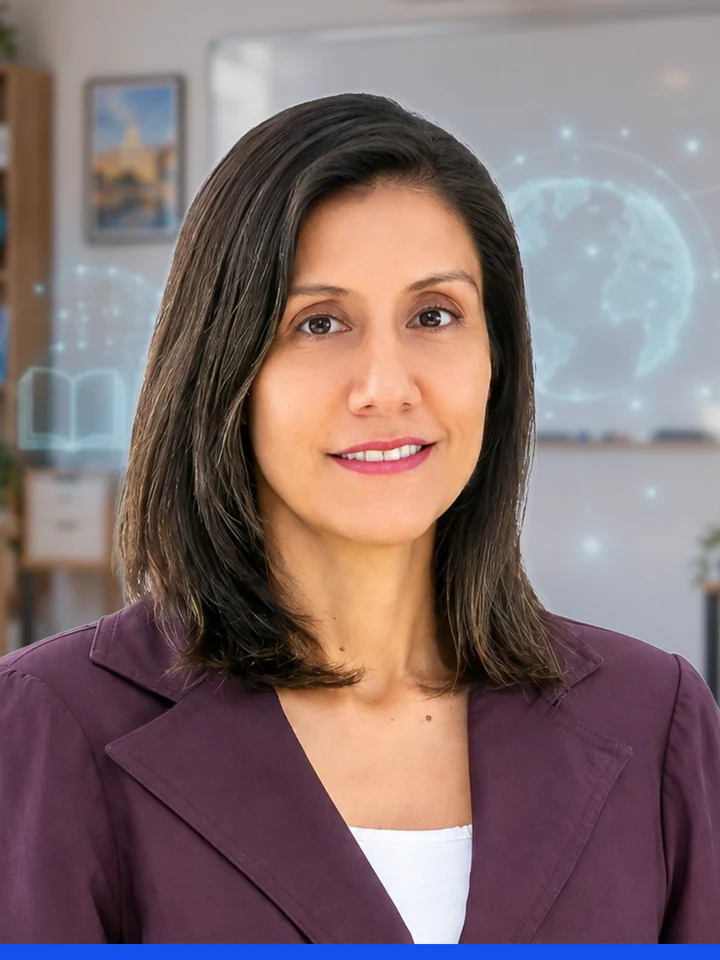
María Helen Camacho
Academic Coordinator · ESPOL
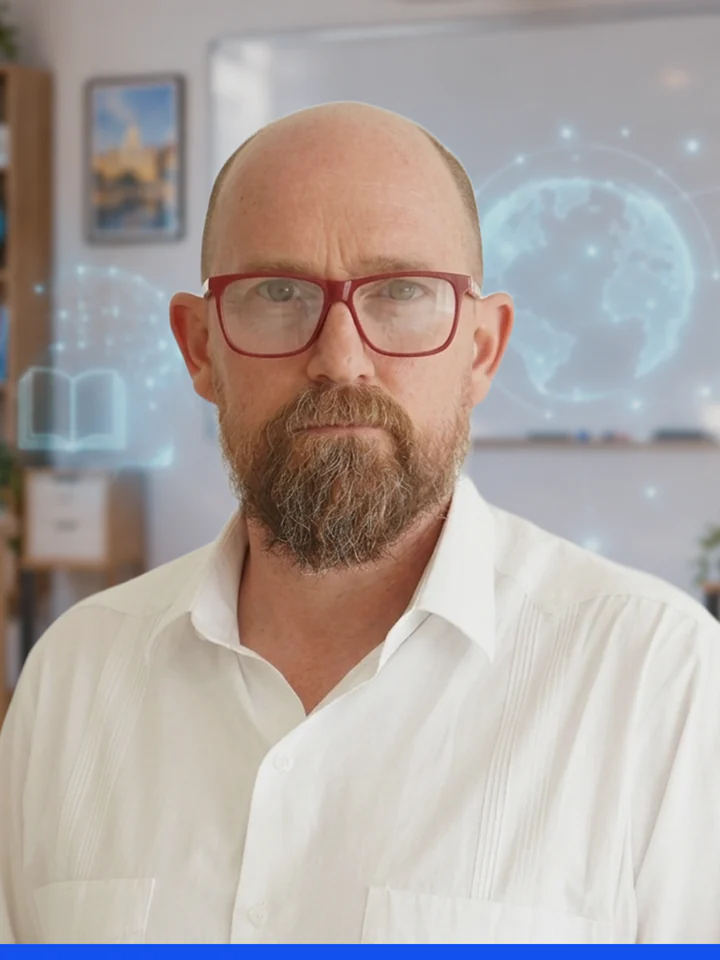
Thomas Bolton
Lecturer & Master of Ceremonies · UEES
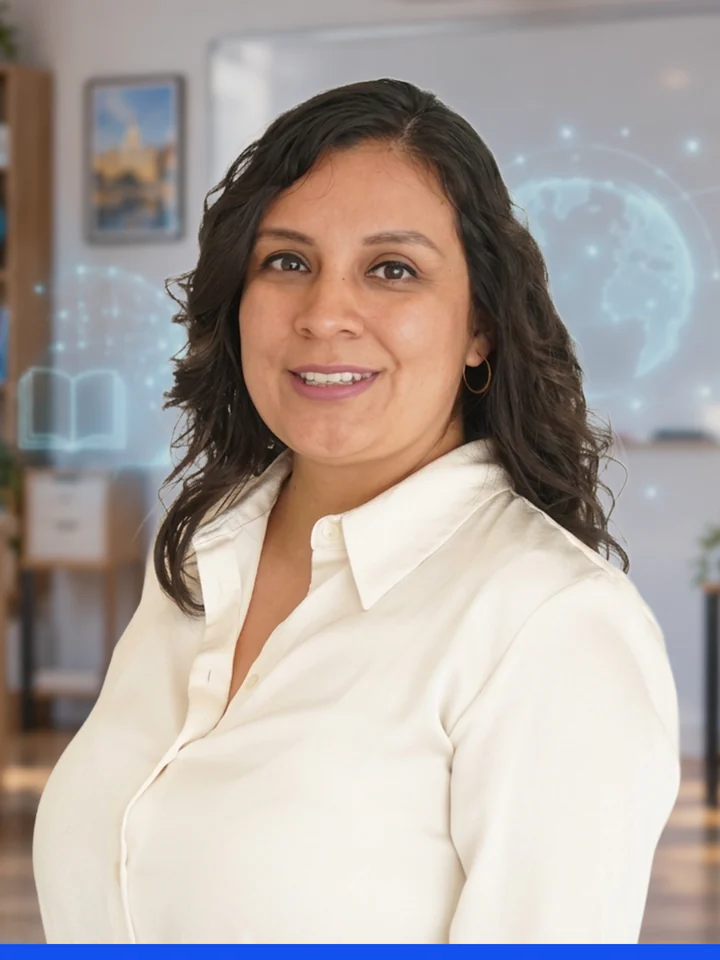
Angelike Páez
Master of Ceremonies · UEES
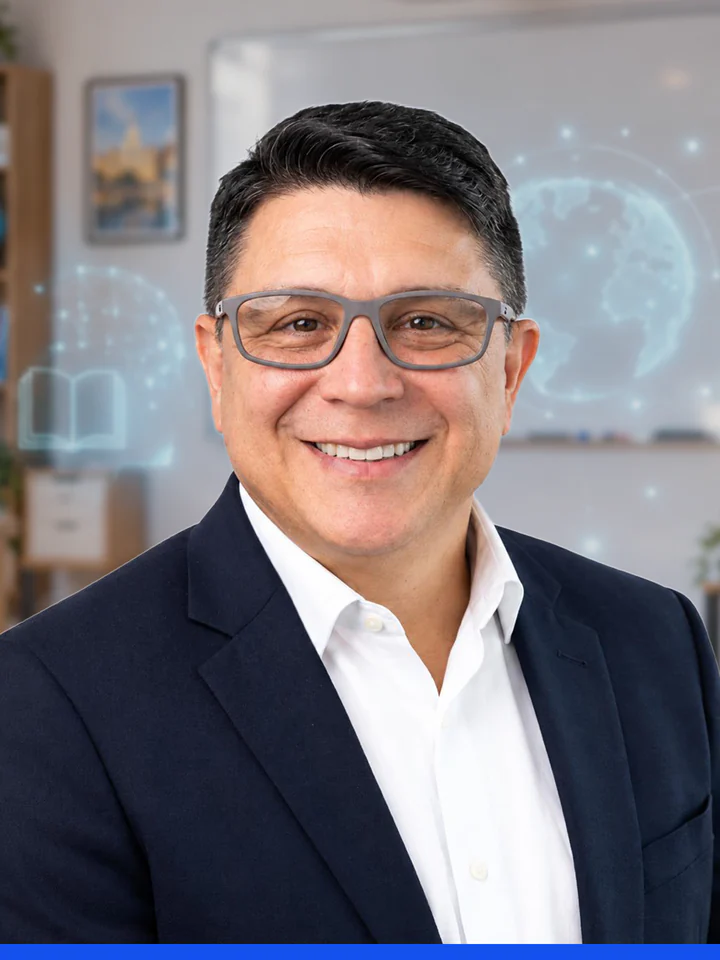
John Howard
Plenary Speaker · National Geographic Learning
Programme
Two plenary sessions for everyone, plus three workshops of your choice from the nine on offer. Each workshop runs twice, so you can build your own route through the day.
-
Saturday
7 November 2026

Registration
Room: Main Lobby
Session description

Opening Ceremony
Room: Sala Fundacional
Session description
Angelike Páez
Master of Ceremonies · UEES
Thomas Bolton
Lecturer & Master of Ceremonies · UEES
Plenary 1 — Teaching Skills for the Future
Room: Sala Fundacional
Session description
John Howard
Plenary Speaker · National Geographic Learning

Comfort Break
Parallel workshops · 10h30 – 11h45
Choose one of the six workshops running in this time slot.
Workshop 1 — Seeing to Learn: Visual Literacy as a Tool for Motivation in Education
Room: P-200
Session description
This academic workshop explores visual literacy as an effective tool for increasing motivation and engagement in educational settings. Through practical and interactive activities, participants will examine how images, videos, infographics, and other visual resources can support comprehension and make learning more meaningful. The workshop emphasizes strategies that educators can apply to encourage active participation, critical thinking, creativity, and communication among students. It also highlights the importance of interpreting and creating visual content in today’s digital learning environment. By integrating visual literacy into teaching practices, educators can create more dynamic, accessible, and motivating learning experiences that respond to diverse student needs.
Runs twice · 10h30 and 12h00 — choose one.
Luis Cerón
Academic Consultant · National Geographic Learning
Workshop 2 — Walk in Your Students’ Shoes: Practical Strategies for Teaching Low-Level Learners
Room: P-201
Session description
When were you last a beginner in anything? Can you remember what it was like to be completely out of your comfort zone and unable to communicate?
In this session you will have a chance to reflect on the learning experience for low-level learners, consider tips and strategies for creating a more accessible learning environment and make your teaching much more effective and impactful.
Runs twice · 10h30 and 12h00 — choose one.
Paul Woodland
Director of Studies · International House Quito
Workshop 3 — Beyond the Prompt: Leveraging Generative AI for Task-Based Language Teaching
Room: P-202
Session description
Crossing the line of basic grammar drills, this hands-on workshop proposes to share a new methodology combined with new trends in education. Generative AI can breathe new life into Task-Based Language Teaching (TBLT). Foreign-language educators often struggle to design authentic, context-rich tasks that engage heterogeneous learners while managing heavy preparation workloads. In this interactive session, our fellow conference participants will develop practical strategies for incorporating AI tools to build scaffolded real-world communicative tasks and design formative assessment rubrics in minutes. Rather than replacing teacher pedagogy, AI is framed as a contributor that enhances meaningful interaction. Attendees will be part of successful classroom case studies and directly engage in a guided "prompt-engineering for TBLT" micro-session. Participants will enhance their knowledge by using this customizable toolkit of ready-to-implement task frameworks, prompt templates, and evidence-based strategies to raise communicative competence in their local ESL environment.
Runs twice · 10h30 and 12h00 — choose one.
María Eugenia Hidalgo
Professor · UEES
Workshop 4 — Teaching the Pronunciation of Vowel Sounds in English: Tips and Tools
Room: P-204
Session description
Providing enough time to practice speaking in class and providing individualised feedback are challenging when teaching speaking to large groups of students. In this context, the topic of teaching English vowel sounds to Spanish-speaking EFL learners gets even more difficult since the number of vowel sounds in English is more than double that of Spanish. To help with this issue, I propose some tips and tools. Some of the tips would include the use of pairs and groups to increase the speaking time in the classroom, the recommendation of a specific number of students per group for activities, a specific order for the teaching of minimal pairs to Spanish speakers, as well as the use of group activities listed in Kagan Cooperative Learning. I will also point the teachers to various freemium tools for the use of the IPA in the classroom (e.g., SpeechAce, a platform that provides immediate feedback for the pronunciation of individual sounds and approximate IELTS fluency scores; Sounds American, a webpage that shows the use of IPA sounds and symbols both in isolation and in word context).
Runs twice · 10h30 and 14h15 — choose one.
Edgar Zurita
EFL Teacher · UEES
Workshop 5 — From Support to Independence: Re-thinking Scaffolding in EFL Writing
Room: P-207
Session description
Scaffolding is often understood as the provision of support; however, effective scaffolding requires intentional decisions about what support learners need, why they need it, when it should be provided, and how it will eventually be withdrawn. This interactive workshop invites English language teachers to examine scaffolding as an intentional instructional design process aimed at developing increasingly independent writers. Through guided reflection, a brief scaffolding debate, analysis of an instructional design case, and a collaborative planning activity, participants will identify learning bottlenecks, evaluate the relationship between learner needs and instructional support, and consider how scaffolds can be sequenced and gradually removed. The workshop also explores the potential role of artificial intelligence as a tool for extending learning without replacing productive thinking. Participants will leave with a practical framework for designing, justifying, and evaluating temporary support in writing instruction, as well as a renewed focus on the relationship between scaffolding, professional judgment, and learner independence.
Runs twice · 10h30 and 14h15 — choose one.
Félix Estrella
Professor & Researcher · ESPOL
Workshop 6 — From AI-Supported Writing to Spaced Retrieval: Building Agency and Fluency in the EFL Classroom
Room: P-208
Session description
This one-hour research showcase, moderated by MSc. Alexis Contreras-Falcones, features two classroom-based studies from the Master’s Program in TEFL at Universidad Espíritu Santo (UEES). The session examines how structured pedagogical interventions foster learner autonomy, oral fluency, and reflective technology use.
In the first study, Magister Mario Alvarado explores a one-week Project-Based Learning intervention with Ecuadorian A2 university learners. He investigates how collaborative projects and structured writing stages encourage responsible ChatGPT use without compromising independent writing autonomy.
In the second study, Tiffany Dávila-Bajaña, Lizeth Salas-Vaca, and Penélope Sánchez-Valdiviezo examine Spaced Retrieval Practice among A1 adult EFL learners. Following 24 instructional hours, participants showed significant improvements in oral fluency metrics (Mean Length of Run and Articulation Rate), alongside non-significant increases in target vocabulary use.
The presentation critically addresses both interventions' possibilities, contextual limits, and research implications, concluding with an audience Q&A.
Runs twice · 10h30 and 14h15 — choose one.
Alexis Contreras
Full-time Professor · UEES
Mario Alvarado
Independent Researcher
Penélope Sánchez
Independent Researcher
Comfort Break
Parallel workshops · 12h00 – 13h15
Choose one of the six workshops running in this time slot.
Workshop 1 — Seeing to Learn: Visual Literacy as a Tool for Motivation in Education
Room: P-200
Session description
This academic workshop explores visual literacy as an effective tool for increasing motivation and engagement in educational settings. Through practical and interactive activities, participants will examine how images, videos, infographics, and other visual resources can support comprehension and make learning more meaningful. The workshop emphasizes strategies that educators can apply to encourage active participation, critical thinking, creativity, and communication among students. It also highlights the importance of interpreting and creating visual content in today’s digital learning environment. By integrating visual literacy into teaching practices, educators can create more dynamic, accessible, and motivating learning experiences that respond to diverse student needs.
Runs twice · 10h30 and 12h00 — choose one.
Luis Cerón
Academic Consultant · National Geographic Learning
Workshop 2 — Walk in Your Students’ Shoes: Practical Strategies for Teaching Low-Level Learners
Room: P-201
Session description
When were you last a beginner in anything? Can you remember what it was like to be completely out of your comfort zone and unable to communicate?
In this session you will have a chance to reflect on the learning experience for low-level learners, consider tips and strategies for creating a more accessible learning environment and make your teaching much more effective and impactful.
Runs twice · 10h30 and 12h00 — choose one.
Paul Woodland
Director of Studies · International House Quito
Workshop 3 — Beyond the Prompt: Leveraging Generative AI for Task-Based Language Teaching
Room: P-202
Session description
Crossing the line of basic grammar drills, this hands-on workshop proposes to share a new methodology combined with new trends in education. Generative AI can breathe new life into Task-Based Language Teaching (TBLT). Foreign-language educators often struggle to design authentic, context-rich tasks that engage heterogeneous learners while managing heavy preparation workloads. In this interactive session, our fellow conference participants will develop practical strategies for incorporating AI tools to build scaffolded real-world communicative tasks and design formative assessment rubrics in minutes. Rather than replacing teacher pedagogy, AI is framed as a contributor that enhances meaningful interaction. Attendees will be part of successful classroom case studies and directly engage in a guided "prompt-engineering for TBLT" micro-session. Participants will enhance their knowledge by using this customizable toolkit of ready-to-implement task frameworks, prompt templates, and evidence-based strategies to raise communicative competence in their local ESL environment.
Runs twice · 10h30 and 12h00 — choose one.
María Eugenia Hidalgo
Professor · UEES
Workshop 7 — Bonding Teaching
Room: P-204
Session description
Runs twice · 12h00 and 14h15 — choose one.
Sol Castello
Faculty Member · UEES
Workshop 8 — From Prompt to Plan: AI Tools for ESL Lesson Design
Room: P-207
Session description
Runs twice · 12h00 and 14h15 — choose one.
Wouter Redelinghuys
CELTA Master Trainer · Cambridge
Workshop 9 — Beyond Prompts: Designing AI-Powered Speaking Lessons Students Can’t Fake
Room: P-208
Session description
Generative AI is rapidly changing how English teachers design classroom activities, but simply asking students to “talk to AI” does not necessarily lead to meaningful communication. This hands-on workshop explores how EFL teachers can move beyond generic AI-generated speaking prompts and use AI to design tasks that require genuine interaction and spontaneous language use.
Recent empirical research demonstrates that AI-mediated speaking activities—when paired with dynamic task structures—can significantly reduce foreign language speaking anxiety and boost learners' willingness to communicate (WTC) by building core self-efficacy (Fathi et al., 2024; Zhou et al., 2025). Furthermore, systematic reviews of generative AI in language education emphasise that while GenAI excels as a collaborative partner and materials provider, its instructional success hinges heavily on deliberate, human-led task design to prevent superficial engagement (Jeon et al., 2025; Wang et al., 2023).
During the workshop, participants will evaluate AI-generated speaking activities and redesign them using a practical 5 Cs framework: Choice, Challenge, Contrast, Communication Gap, and Change. Participants will also examine how task design can make speaking activities less predictable and more resistant to superficial or scripted responses. By the end of the session, teachers will have transformed a conventional speaking prompt into an interactive, differentiated, classroom-ready lesson that uses AI as a design partner rather than a replacement for meaningful human communication.
Runs twice · 12h00 and 14h15 — choose one.
Jenny Villarreal
Assessment Team Leader · ESPOL
Janella Maldonado
Teacher Trainer · ESPOL
María Helen Camacho
Academic Coordinator · ESPOL

Lunch Break
Parallel workshops · 14h15 – 15h30
Choose one of the six workshops running in this time slot.
Workshop 4 — Teaching the Pronunciation of Vowel Sounds in English: Tips and Tools
Room: P-200
Session description
Providing enough time to practice speaking in class and providing individualised feedback are challenging when teaching speaking to large groups of students. In this context, the topic of teaching English vowel sounds to Spanish-speaking EFL learners gets even more difficult since the number of vowel sounds in English is more than double that of Spanish. To help with this issue, I propose some tips and tools. Some of the tips would include the use of pairs and groups to increase the speaking time in the classroom, the recommendation of a specific number of students per group for activities, a specific order for the teaching of minimal pairs to Spanish speakers, as well as the use of group activities listed in Kagan Cooperative Learning. I will also point the teachers to various freemium tools for the use of the IPA in the classroom (e.g., SpeechAce, a platform that provides immediate feedback for the pronunciation of individual sounds and approximate IELTS fluency scores; Sounds American, a webpage that shows the use of IPA sounds and symbols both in isolation and in word context).
Runs twice · 10h30 and 14h15 — choose one.
Edgar Zurita
EFL Teacher · UEES
Workshop 5 — From Support to Independence: Re-thinking Scaffolding in EFL Writing
Room: P-201
Session description
Scaffolding is often understood as the provision of support; however, effective scaffolding requires intentional decisions about what support learners need, why they need it, when it should be provided, and how it will eventually be withdrawn. This interactive workshop invites English language teachers to examine scaffolding as an intentional instructional design process aimed at developing increasingly independent writers. Through guided reflection, a brief scaffolding debate, analysis of an instructional design case, and a collaborative planning activity, participants will identify learning bottlenecks, evaluate the relationship between learner needs and instructional support, and consider how scaffolds can be sequenced and gradually removed. The workshop also explores the potential role of artificial intelligence as a tool for extending learning without replacing productive thinking. Participants will leave with a practical framework for designing, justifying, and evaluating temporary support in writing instruction, as well as a renewed focus on the relationship between scaffolding, professional judgment, and learner independence.
Runs twice · 10h30 and 14h15 — choose one.
Félix Estrella
Professor & Researcher · ESPOL
Workshop 6 — From AI-Supported Writing to Spaced Retrieval: Building Agency and Fluency in the EFL Classroom
Room: P-202
Session description
This one-hour research showcase, moderated by MSc. Alexis Contreras-Falcones, features two classroom-based studies from the Master’s Program in TEFL at Universidad Espíritu Santo (UEES). The session examines how structured pedagogical interventions foster learner autonomy, oral fluency, and reflective technology use.
In the first study, Magister Mario Alvarado explores a one-week Project-Based Learning intervention with Ecuadorian A2 university learners. He investigates how collaborative projects and structured writing stages encourage responsible ChatGPT use without compromising independent writing autonomy.
In the second study, Tiffany Dávila-Bajaña, Lizeth Salas-Vaca, and Penélope Sánchez-Valdiviezo examine Spaced Retrieval Practice among A1 adult EFL learners. Following 24 instructional hours, participants showed significant improvements in oral fluency metrics (Mean Length of Run and Articulation Rate), alongside non-significant increases in target vocabulary use.
The presentation critically addresses both interventions' possibilities, contextual limits, and research implications, concluding with an audience Q&A.
Runs twice · 10h30 and 14h15 — choose one.
Alexis Contreras
Full-time Professor · UEES
Mario Alvarado
Independent Researcher
Penélope Sánchez
Independent Researcher
Workshop 7 — Bonding Teaching
Room: P-204
Session description
Runs twice · 12h00 and 14h15 — choose one.
Sol Castello
Faculty Member · UEES
Workshop 8 — From Prompt to Plan: AI Tools for ESL Lesson Design
Room: P-207
Session description
Runs twice · 12h00 and 14h15 — choose one.
Wouter Redelinghuys
CELTA Master Trainer · Cambridge
Workshop 9 — Beyond Prompts: Designing AI-Powered Speaking Lessons Students Can’t Fake
Room: P-208
Session description
Generative AI is rapidly changing how English teachers design classroom activities, but simply asking students to “talk to AI” does not necessarily lead to meaningful communication. This hands-on workshop explores how EFL teachers can move beyond generic AI-generated speaking prompts and use AI to design tasks that require genuine interaction and spontaneous language use.
Recent empirical research demonstrates that AI-mediated speaking activities—when paired with dynamic task structures—can significantly reduce foreign language speaking anxiety and boost learners' willingness to communicate (WTC) by building core self-efficacy (Fathi et al., 2024; Zhou et al., 2025). Furthermore, systematic reviews of generative AI in language education emphasise that while GenAI excels as a collaborative partner and materials provider, its instructional success hinges heavily on deliberate, human-led task design to prevent superficial engagement (Jeon et al., 2025; Wang et al., 2023).
During the workshop, participants will evaluate AI-generated speaking activities and redesign them using a practical 5 Cs framework: Choice, Challenge, Contrast, Communication Gap, and Change. Participants will also examine how task design can make speaking activities less predictable and more resistant to superficial or scripted responses. By the end of the session, teachers will have transformed a conventional speaking prompt into an interactive, differentiated, classroom-ready lesson that uses AI as a design partner rather than a replacement for meaningful human communication.
Runs twice · 12h00 and 14h15 — choose one.
Jenny Villarreal
Assessment Team Leader · ESPOL
Janella Maldonado
Teacher Trainer · ESPOL
María Helen Camacho
Academic Coordinator · ESPOL
Comfort Break
Plenary 2 — Round Table: Teaching Skills for the Future
Room: Sala Fundacional
Session description
Thomas Bolton
Moderator Lecturer & Master of Ceremonies · UEES
Luis Cerón
Academic Consultant · National Geographic Learning
Alexis Contreras
Full-time Professor · UEES
Jenny Villarreal
Assessment Team Leader · ESPOL
Paul Woodland
Director of Studies · International House Quito

Closing Ceremony & Final Words
Room: Sala Fundacional
Session description
Angelike Páez
Master of Ceremonies · UEES
Thomas Bolton
Lecturer & Master of Ceremonies · UEES